Brittany is one of the most rewarding regions of France for cost-conscious travellers. The things that make it special — the coastal path, the fishing villages, the standing stones, the crêperies — are either free or inexpensive. The biggest spending decisions are the ferry crossing and where you stay, and both can be managed with a little planning.
AT A GLANCE
The biggest ways to save
If you read no further, these four decisions will have the largest impact on your overall spend:
Shoulder season — March to May or September to October — is cheaper and quieter, with weather that is still good for walking and sightseeing.
The ferry is the single biggest cost. Compare the whole door-to-door journey, not just the crossing fare. See our guides to the cheapest way to get to Brittany and the cheapest times to book Brittany Ferries.
A self-catering gîte or a campsite costs less than a hotel and lets you cook with market produce. Smaller towns are cheaper bases than the tourist hotspots.
Crêperies and market picnics are substantially cheaper than restaurant meals. A savoury galette and a bowl of cider is a proper Breton lunch for a fraction of the cost.
WHEN TO VISIT
When to visit Brittany for less
Brittany's peak tourist season runs from mid-June through August. Prices for accommodation are at their highest, the popular destinations are at their busiest, and you may need to book restaurants and attractions well ahead. The weather is at its best, but the cost premium is significant.
Shoulder season — March to May and September to October — is the sweet spot for budget-conscious travellers. The weather is still mild enough for walking, cycling and sightseeing, the coastal path is quieter, and accommodation is noticeably cheaper. September is particularly good: the summer crowds have gone home, many towns hold their weekly markets as usual, and the weather can still be pleasant for coastal walking and, for those who don't mind cooler water, swimming.
March and April bring mild temperatures suited to walking the coast or exploring medieval towns. Wildflowers appear along the coastal path in spring, and the autumn colours in the forests and heathland are spectacular from late September into October.
Winter travel (November to February) is the cheapest option, but some attractions, restaurants and campsites close or reduce their hours. If you travel in winter, base yourself in a larger town like Rennes, Vannes or Quimper where facilities remain open year-round.
GETTING THERE
Getting to Brittany on a budget
Getting the ferry right is one of the biggest savings you can make on a Brittany holiday. Two direct ferry routes serve Brittany from the UK: Plymouth to Roscoff and Portsmouth to Saint-Malo. Both arrive directly in Brittany, with no Normandy driving leg.
The cheapest crossing is not always the best overall journey. A cheaper ferry from a port further from home can cost more in fuel and time than a more expensive one from a closer port. Use the Route Finder to compare the complete door-to-door journey — UK drive, ferry crossing and onward drive in France — rather than choosing on crossing fare alone.
For detailed guidance on minimising ferry costs, see our dedicated guides: the cheapest way to get to Brittany and the cheapest times of year to book Brittany Ferries. If you are taking your own car, our practical guide to taking your car on the ferry covers the whole port-to-port process. You can also compare all ferry routes to Brittany and read our driving to Brittany guide.
GETTING AROUND
Getting around without spending too much
For most visitors, taking your own car on the ferry is the most practical option — it gives you complete flexibility and avoids the cost of car hire in France. If you are taking your car, our driving to Brittany guide covers French road rules, tolls and practical advice.
If you prefer not to drive, the BreizhGo network operated by TER Bretagne provides regional train services across Brittany. Fares are distance-based and tickets can be used on any TER train within the region. A BreizhGo pass allows unlimited travel on TER Bretagne trains for a set number of days — a 2-day pass is available for those who want to explore by rail. BreizhGo also covers some bus and sea routes. Check the current fares and pass options on the official TER Bretagne website before travelling, as pricing can change.
Cycling is another economical way to explore. Brittany has an extensive network of cycling routes, including sections of the Vélodyssée and the Nantes-Brest Canal towpath. Many towns have bike hire shops, and some campsites and gîtes provide bikes for guests.
WHERE TO STAY
Where to stay for less
Self-catering accommodation is the most cost-effective option for a Brittany holiday, particularly for families or couples staying a week or more. A gîte (a holiday cottage) or a chambre d'hôtes (a B&B) typically costs less than a hotel and gives you a kitchen, which means you can cook with produce from the local market rather than eating out for every meal.
Camping is the cheapest option from April through October. Brittany has hundreds of campsites, ranging from basic municipal sites to large holiday parks with pools and entertainment. The simplest pitches are the most affordable, and many are within walking distance of a beach or the coastal path. If you do not have your own tent, some campsites offer ready-pitched tents or mobile homes.
Base yourself in a smaller town rather than a tourist hotspot. Morlaix, for example, sits on the main train line and provides easy access to both the Pink Granite Coast and the western beaches. Quimperlé, Josselin and Pontivy are similarly well-placed and more affordable than the coastal destinations they provide access to.
Staying in one place and taking day trips — rather than moving accommodation every night — saves on transport and may qualify you for a longer-stay discount. Many gîte owners offer better rates for bookings of a week or more.
EATING WELL
Eating well on a budget
The local market is the best friend of a budget traveller in Brittany. Every town has at least one weekly market where you can buy fresh bread, cheese, fruit and vegetables directly from producers. The Marché des Lices in Rennes, held every Saturday morning, is one of the largest food markets in France and worth a visit even if you are not self-catering.
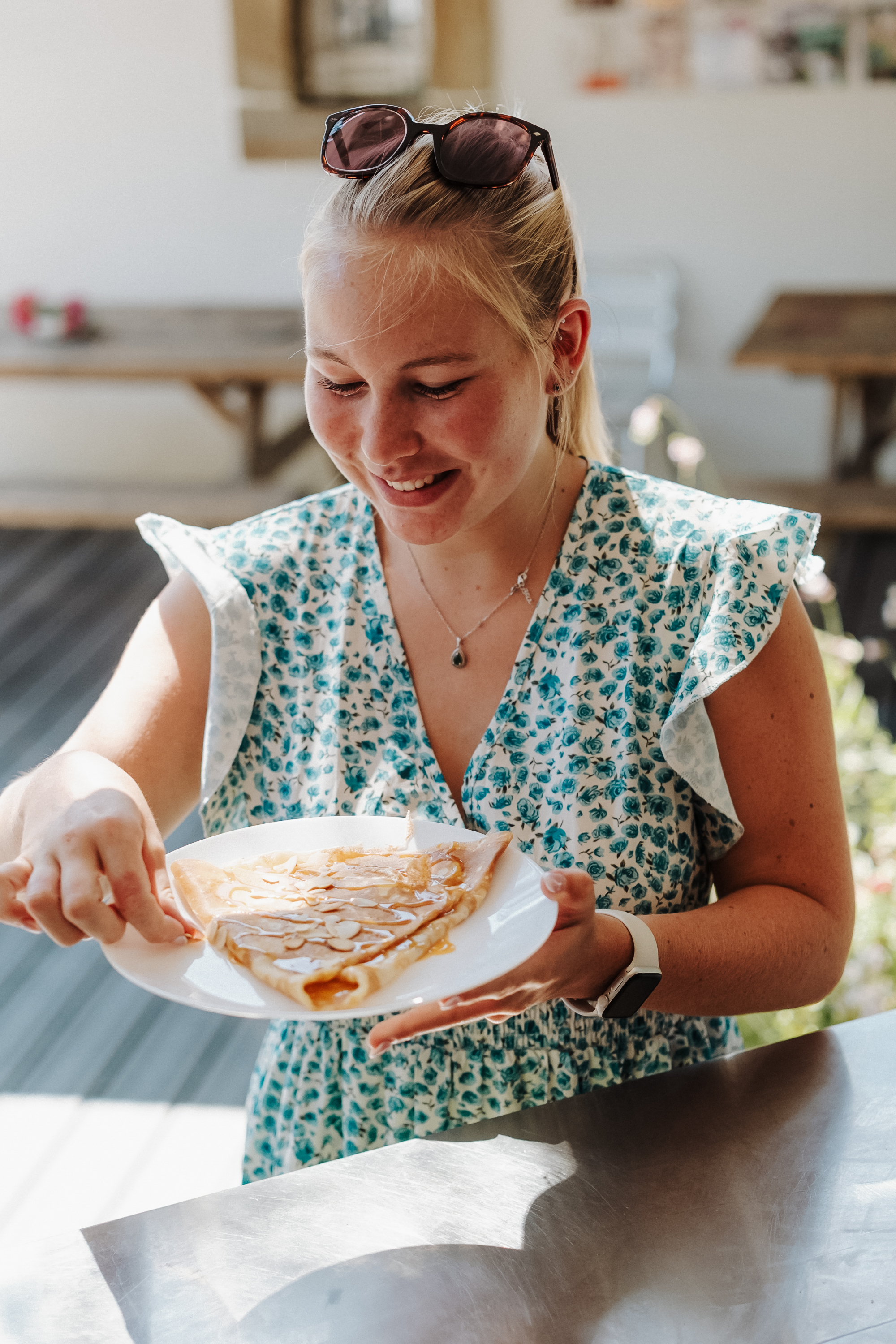
For an affordable meal out, head to a crêperie. A galette is a filling lunch that costs far less than a restaurant main course. Sweet crêpes are cheaper still. Crêperies are found in almost every town in Brittany, and the quality is generally high.
Avoid restaurants in the immediate vicinity of major tourist attractions. Walk a few streets away and you will typically find better food at lower prices. For picnics, supermarkets such as Carrefour and Super U sell the same regional products — Breton biscuits, sea salt, cider — as the tourist shops, but at lower prices.
FREE THINGS TO DO
The best free things to do in Brittany
Many of Brittany's best attractions cost nothing. The GR34, also known as the Sentier des Douaniers, is a long-distance footpath that follows the entire Brittany coastline for over 1,800 kilometres. You can walk any section without paying a cent, and the views are among the finest in France. Temporary closures and diversions can occur, particularly after winter storms, so check locally if you are planning a specific section.
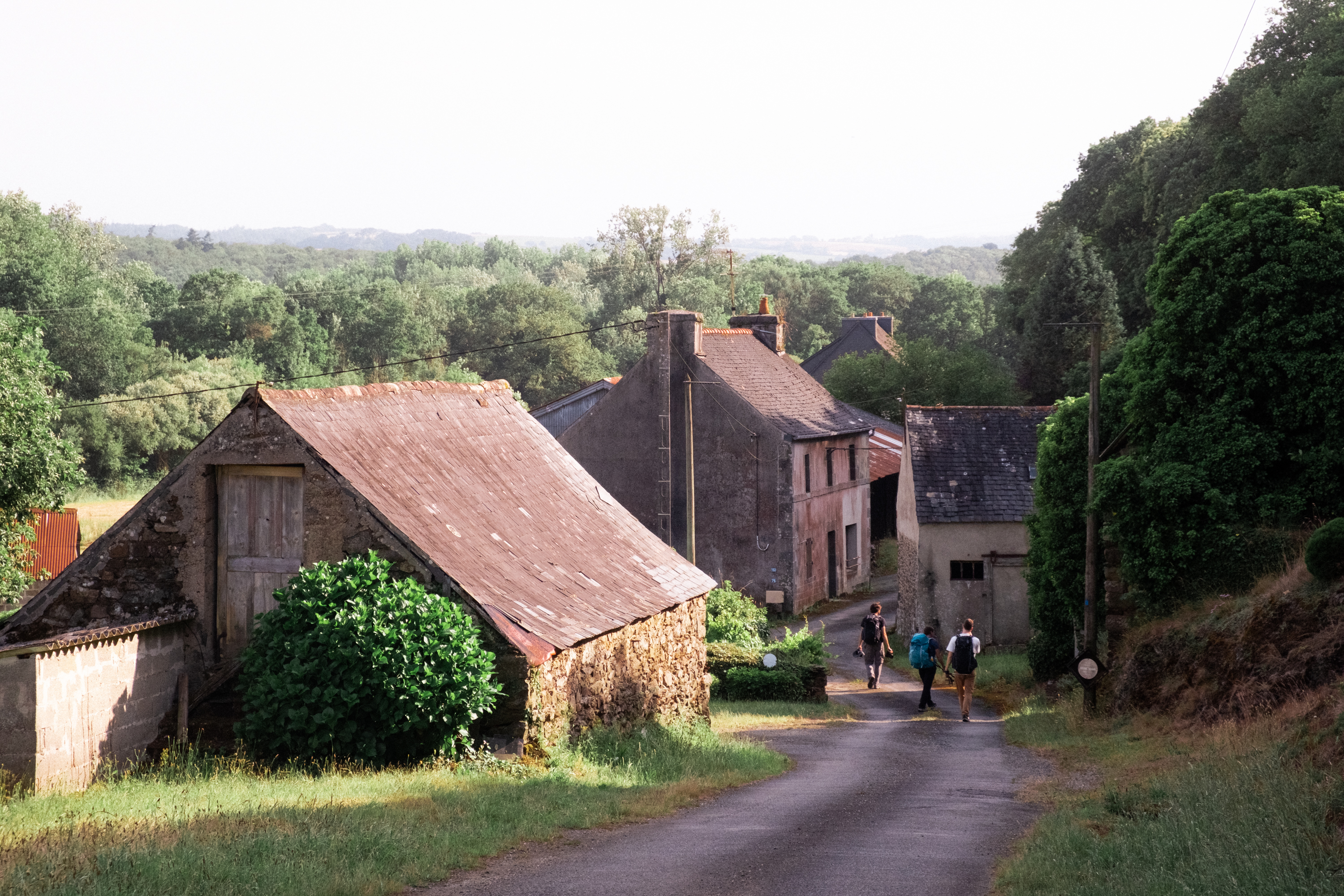
Public beaches are free and there are hundreds to choose from, from the family-friendly sands of southern Brittany to the dramatic coves of the Pink Granite Coast. Churches and cathedrals are generally free to enter — Saint-Corentin Cathedral in Quimper is a highlight, with its mismatched spires and stained glass.
Many towns offer free self-guided walking tours. Tourist offices provide maps for routes through the medieval streets of Dinan, Vannes and Saint-Malo, and these are a good way to orient yourself on a first visit. The standing stones at Carnac can be viewed from the roadside year-round, though access to the alignments themselves is restricted during the main tourist season to protect the site.
BEACHES AND COASTAL WALKS
Beaches and coastal walks
Brittany's coastline is its greatest free asset. The GR34 coastal path connects fishing villages, lighthouses and wild beaches along the entire length of the region. The section between Saint-Malo and Cancale offers stunning views of rocky cliffs and turquoise water, while the Pink Granite Coast between Perros-Guirec and Ploumanac'h is one of the most distinctive landscapes in France.
For families, the beaches at Trégastel and Saint-Jacut-de-la-Mer have rock pools that keep children occupied for hours at low tide. Check the tide times before you go — the sea rises quickly on some sections of the coast and can cut off access to the best spots.
MARKETS AND LOCAL FOOD
Markets and local food
Brittany's weekly markets are free to browse and are among the best free entertainment the region offers. Even if you are not self-catering, a Saturday morning at the market is a genuinely worthwhile experience — farmers arrange their produce in colourful displays, fishmongers call out the day's catch, and the atmosphere feels like a street festival.
Beyond Rennes, the markets at Vannes (Wednesdays and Saturdays), Quimper and Saint-Malo are all worth seeking out. Arrive early for the best produce — most markets start around 7:30am and wind down by lunchtime.
ATTRACTIONS
Save money on attractions
Brittany's major attractions are not prohibitively expensive, but a family visiting several in a week can add up. A few practical approaches help:
- Book online: Many attractions offer a discount for booking in advance on their official website, and you may avoid queueing at the entrance.
- Check for free admission days: Many state-run museums and monuments in France offer free admission on the first Sunday of the month. However, policies vary — some are free year-round on the first Sunday, others only from November to March, and some require advance booking even for free admission. Check the official website of each attraction before relying on this.
- Visit in the afternoon: Some attractions have shorter queues after lunch, which means you spend less time waiting and more time exploring.
- Look for family rates: Many attractions offer reduced admission for families, and children under a certain age (often 6 or under) are frequently admitted free. Check the attraction's website for current pricing.
For wet-weather days when you need indoor attractions, see our guide to Brittany's best museums — several of these have free or low-cost admission.
For a broader guide to what to see and do across the region, see our complete guide to things to do in Brittany.
A SAMPLE DAY
A sample low-cost day in Brittany
Here is how a budget-friendly day in Brittany might look — adapt it to suit where you're staying and what you want to see.
- Morning: Walk a section of the GR34 coastal path, or explore the old town of your base with a free map from the tourist office.
- Lunch: Visit the weekly market and buy bread, cheese, fruit and pastries for a picnic. Find a bench with a view, or head to the beach.
- Afternoon: Spend time at a free public beach, or visit a church or cathedral. If you visit a paid attraction, check whether it offers a discount for online booking or a family rate.
- Evening: Eat at a local crêperie — a galette and a bowl of cider is a proper Breton dinner at a fraction of restaurant prices.
CHECKLIST
Practical budget checklist
- Timing: Travel in shoulder season (March to May or September to October) for lower accommodation prices.
- Ferry: Compare the whole door-to-door journey, not just the crossing fare. Book ahead for the best fares.
- Accommodation: Choose a gîte, chambre d'hôtes or campsite over a hotel. Stay in a smaller town as a base.
- Food: Self-cater from the local market. Eat lunch out at a crêperie rather than a full restaurant.
- Activities: Walk the GR34, visit free beaches, and explore churches and old towns. Check attraction websites for online booking discounts and free admission days.
- Getting around: Take your own car on the ferry for maximum flexibility, or use the BreizhGo train network. Check current TER Bretagne fares before travelling.
- Souvenirs: Buy Breton biscuits, sea salt and cider from supermarkets rather than tourist shops.