Brittany has far more to offer indoors than you might expect. From a museum dedicated to the artists who followed Gauguin to a prehistory collection that explains the standing stones at Carnac, these are destinations in their own right — not just places to wait out a shower.
AT A GLANCE
Best rainy-day attractions at a glance
Here are the ten museums covered in this guide, with their location and a one-line summary. Each is covered in detail below.
Rennes — Museum of Brittany, library and planetarium under one roof
Rennes — European art from Rubens to Picasso, with free admission
Vannes — Fine arts museum in a medieval marketplace building
Pont-Aven — The Pont-Aven School and the legacy of Paul Gauguin
Carnac — One of Europe's leading museums of prehistory
Lorient — Interactive sailing museum with simulators
Saint-Brieuc — Regional art, crafts and local industries
Douarnenez — Maritime history in an old cannery on the harbour
Port-Louis — French East India Company, inside the citadel
Ouessant Island — Traditional island life, tools and photographs
RENNES
Les Champs Libres
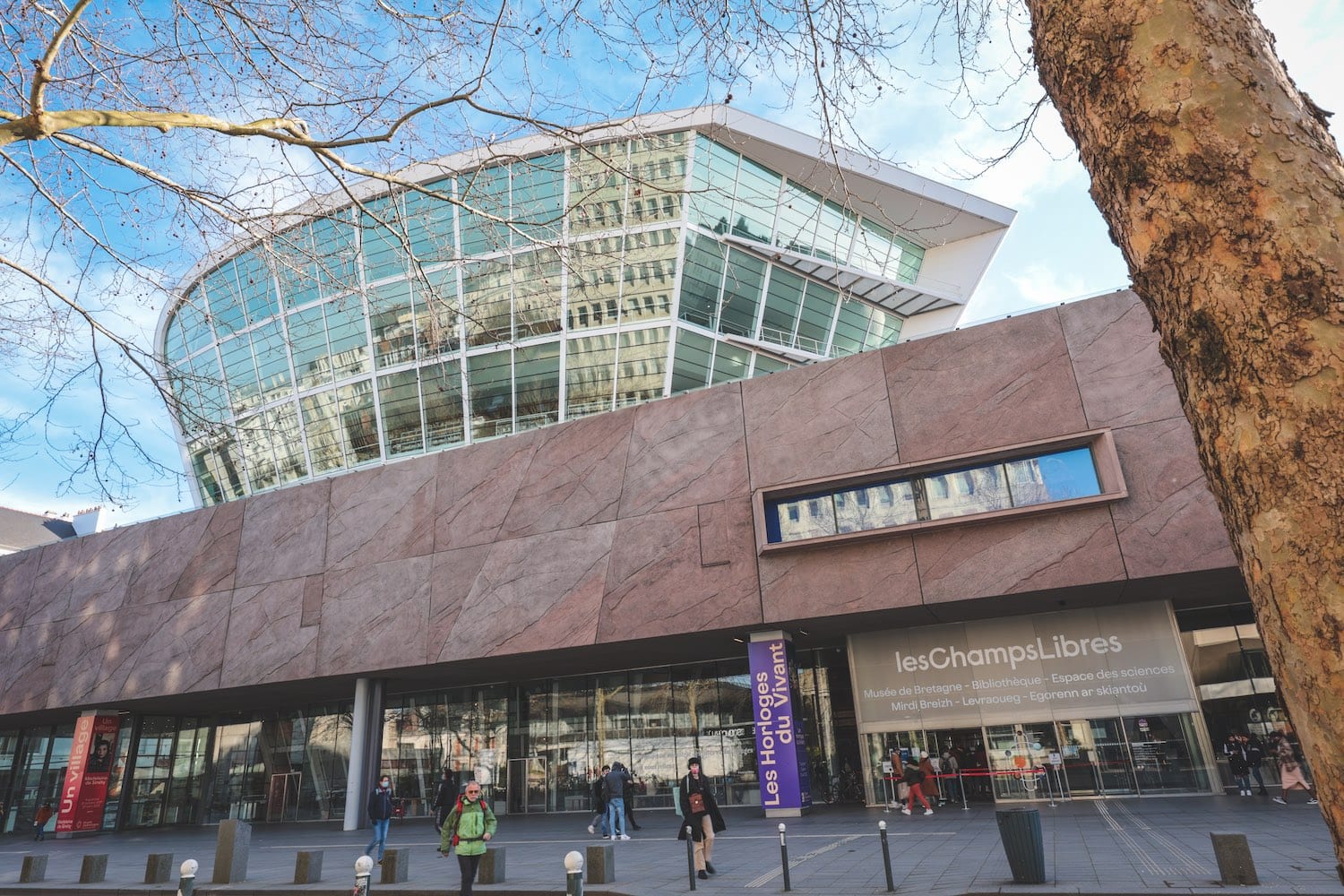
Les Champs Libres is a cultural complex in the centre of Rennes that houses three attractions under one roof: the Museum of Brittany (Musée de Bretagne), the Rennes Métropole Library, and a planetarium. It is effectively a one-stop destination for a wet afternoon.
The Museum of Brittany covers the region's history from prehistoric times to the present day, with interactive displays and artefacts that engage visitors of all ages. The planetarium offers immersive shows on the universe. Temporary exhibitions rotate throughout the year, so there is often something new even if you have visited before. A café on site makes it easy to spend a full morning or afternoon without going back outside.
Its central location in Rennes means you can combine it with a walk around the old town once the weather clears.
RENNES
Musée des Beaux-Arts
The Musée des Beaux-Arts in Rennes holds one of the finest art collections in western France. The permanent collection spans several centuries of European painting, including works by Rubens, Picasso, and other major figures. A second site, the Musée Quai Zola, opened in the Maurepas district in February 2025, extending the museum's reach across the city.
The museum is easy to navigate, with well-organised galleries that let you move at your own pace. Temporary exhibitions often showcase modern and avant-garde work, adding a contemporary dimension to the historic core of the collection. Admission is free, which makes it an easy option for a spontaneous rainy-day visit.
VANNES
Musée de la Cohue
The Musée de la Cohue, also known as La Cohue — Musée des Beaux-Arts, is a fine arts museum housed in a former medieval marketplace in the heart of Vannes's old town. The building itself is a significant part of the experience: a half-timbered structure with centuries of history embedded in its walls.
The permanent collection features regional artwork, while rotating exhibitions bring in modern and contemporary pieces. The contrast between the historic setting and the art on display is part of what makes this museum distinctive — you are seeing contemporary work in a space that has been a trading floor, a court, and a public hall over the centuries.
The museum is within easy walking distance of Vannes's harbour, cathedral, and the old town's cafés and boutiques, making it a natural stop on a day exploring the Gulf of Morbihan's principal town.
PONT-AVEN
Musée de Pont-Aven
Pont-Aven is known as the "City of Painters," and the Musée de Pont-Aven is dedicated to the artistic movement that took its name from the town. The Pont-Aven School, which included Paul Gauguin among its most famous members, was inspired by the natural beauty of the area and produced groundbreaking work in the late nineteenth century.
The museum's collection includes paintings, sketches, and sculptures from the Pont-Aven School, with exhibits that explore the artists' techniques and inspirations. The museum was renovated and extended, and its modern design contrasts with the historic charm of the town around it. Guided tours delve deeper into Gauguin's life and legacy.
A stroll through Pont-Aven itself completes the visit — the town that inspired the paintings is compact, picturesque, and walkable even in light rain.
CARNAC
Musée de la Préhistoire
Carnac is famous for its megalithic alignments — thousands of standing stones arranged in rows across the heathland — and the Musée de la Préhistoire provides the context that makes them meaningful. It is one of the leading museums of prehistory in Europe, with reference collections covering the Neolithic period (4900–2200 BC).
The museum's displays include tools, pottery, and jewellery excavated from the region's prehistoric sites, alongside multimedia presentations that make the subject accessible without requiring prior knowledge. Visiting the museum before heading out to the alignments themselves gives you a framework for understanding what you are looking at — and the alignments are visible in most weather, so a wet morning at the museum need not write off the afternoon.
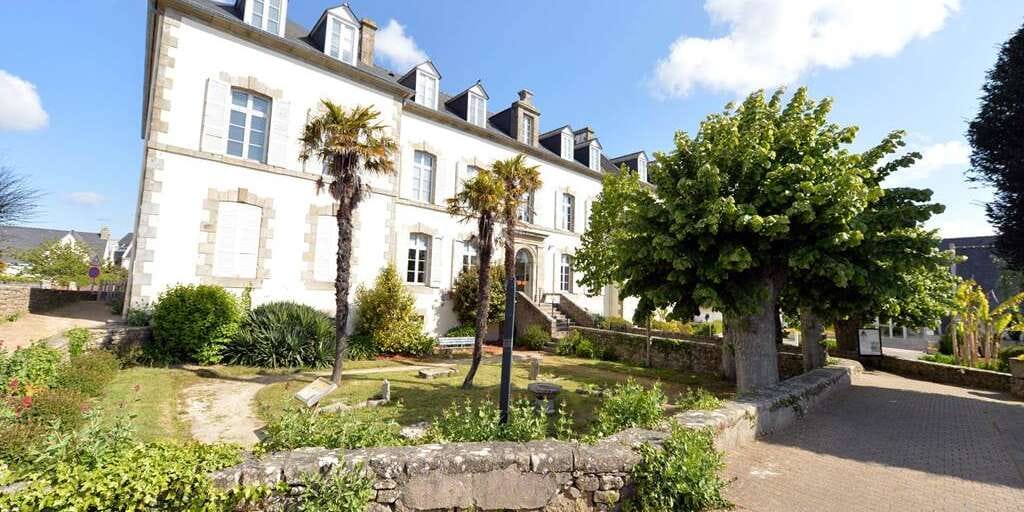
The museum is in the centre of Carnac, within walking distance of the town's shops and cafés.
LORIENT
Cité de la Voile Éric Tabarly
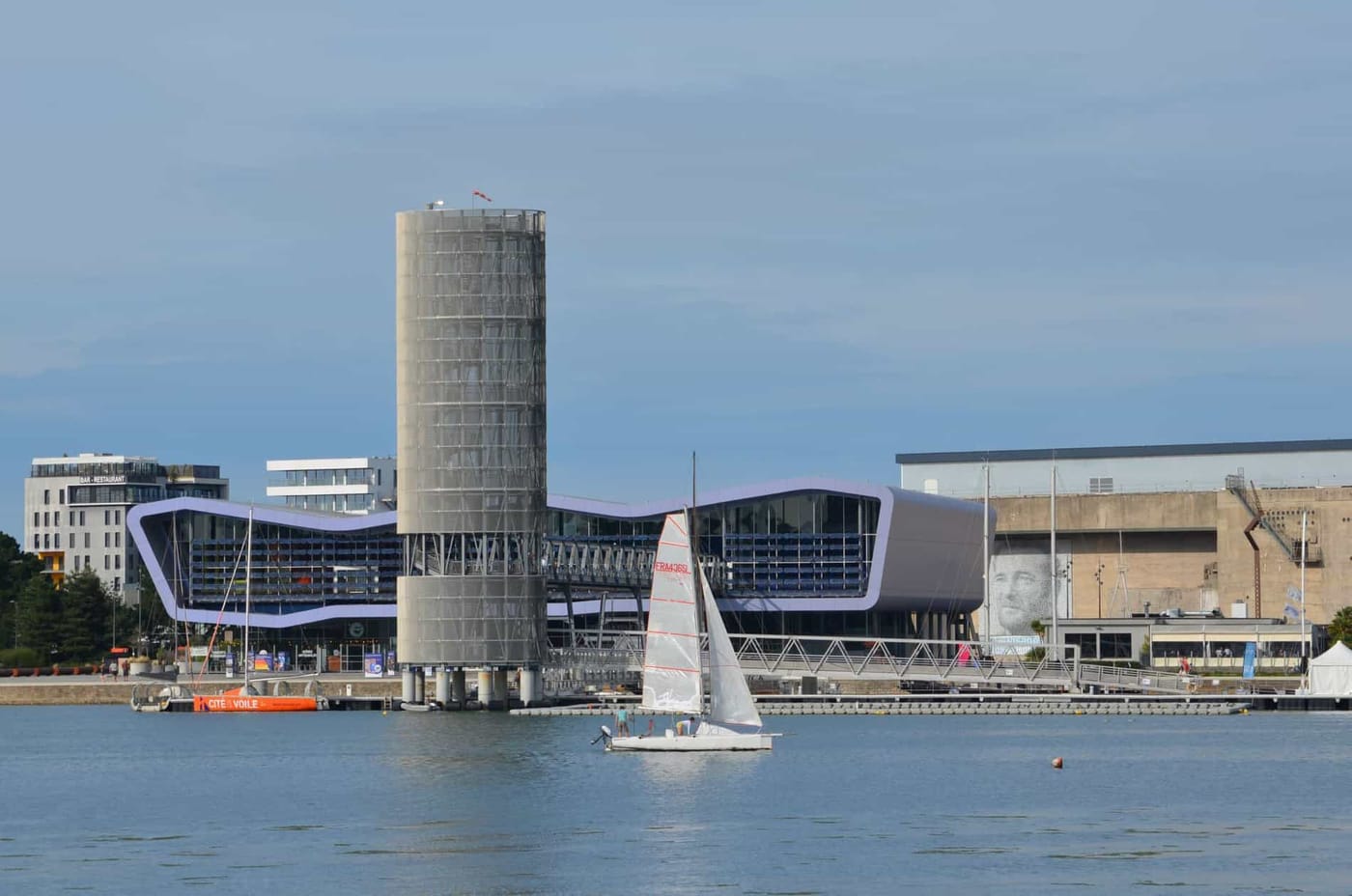
The Cité de la Voile Éric Tabarly in Lorient is an interactive museum dedicated to sailing and offshore racing, and to the legacy of the French yachtsman Éric Tabarly. Its hands-on exhibits and simulators make it one of the most engaging indoor attractions in Brittany, particularly for families with school-age children.
The museum covers the history of sailing, maritime navigation, and the technological innovations that have shaped the sport. Its waterfront location on Lorient's harbour adds to the experience — even on a wet day, the views of the port and the moored racing yachts are part of the setting.
Seasonal events, including sailing workshops and family-friendly activities, run throughout the year, so there is often something beyond the permanent exhibition to discover.
SAINT-BRIEUC
Musée d'art et d'histoire
The Musée d'art et d'histoire in Saint-Brieuc explores the art and history of the region, with exhibits ranging from traditional crafts to contemporary art. The collection also covers local industries such as fishing and textile production, giving a picture of how the area developed.
The building blends old and new, with modern galleries housed in a historic structure. Temporary exhibitions often highlight regional themes. The museum's garden is a quiet space, though it is naturally better suited to a dry day than a wet one.
Note that the museum's opening hours are limited — it is currently open on Wednesdays and Fridays. Check the current schedule before planning your visit, as opening times can change seasonally.
DOUARNENEZ
Port-Musée
The Port-Musée in Douarnenez, also known as the Port Museum, is located in a former cannery on the Port-Rhu harbour. It focuses on maritime history, with a collection that includes restored traditional boats, photographs, and artefacts telling the story of Brittany's seafaring past.
The museum has over 280 boats in its collection and around ten thousand objects connected to the maritime world. Some of the restored vessels can be boarded, giving a hands-on sense of what life at sea was like. The harbour-side location means the views are part of the experience, even when the weather is poor.
Opening is seasonal, so check the museum's website before travelling outside the summer months.
PORT-LOUIS
Musée de la Compagnie des Indes
The Musée de la Compagnie des Indes is located inside the Citadel of Port-Louis, near Lorient. It explores the history of the French East India Company and other French trading companies, and their influence on global trade. The collection includes navigational instruments, maps, and items brought back from Asia and Africa.
The museum provides a window into the maritime history that shaped both Brittany and France more broadly. The citadel itself is part of the experience — visitors can explore the fortifications, which offer views over the harbour and the sea beyond.
Opening is seasonal, typically from spring through autumn, so verify current opening dates before travelling.
OUESSANT ISLAND
EcoMusée d'Ouessant
The EcoMusée d'Ouessant, also known as the Maison du Niou, is on Ouessant Island off the western tip of Brittany. The museum highlights the traditional lifestyles of the islanders, focusing on their relationship with the sea and the local ecology. Exhibits include tools, clothing, and photographs that depict life on this remote island.
The museum's setting on the rugged island makes it a destination in itself. Even on a rainy day, the dramatic landscape adds to the experience. Reaching Ouessant requires a ferry crossing from Brest or Le Conquet, so this is best planned as part of a longer island visit rather than a quick stop.
For most visitors to Brittany, the EcoMusée d'Ouessant is the most ambitious of the museums on this list to reach — but if your itinerary already takes you to the islands, it is worth including.
PRACTICAL ADVICE
Planning a wet-weather day in Brittany
Before setting out for any of these museums, check the current opening times on the attraction's official website. Several have seasonal opening hours, and some — particularly the Musée d'art et d'histoire in Saint-Brieuc and the Musée de la Compagnie des Indes in Port-Louis — have restricted schedules that may not match your travel days.
If you are travelling in peak season, consider booking in advance where the museum offers it. The Cité de la Voile Éric Tabarly and Les Champs Libres both attract significant visitor numbers in summer, and pre-booking can save queueing in the rain.
Most of these museums are in towns worth visiting in their own right. Rather than treating a museum visit as a stand-alone activity, combine it with a walk around the old town, a lunch, or a visit to the harbour. That way, if the rain eases, you are already in a place worth exploring — and if it does not, you have a full indoor programme.
If you are travelling with children, the Cité de la Voile Éric Tabarly in Lorient and Les Champs Libres in Rennes are the most hands-on options on this list. For more family-specific ideas, including aquariums and other indoor attractions, see our guide to keeping kids entertained in Brittany.