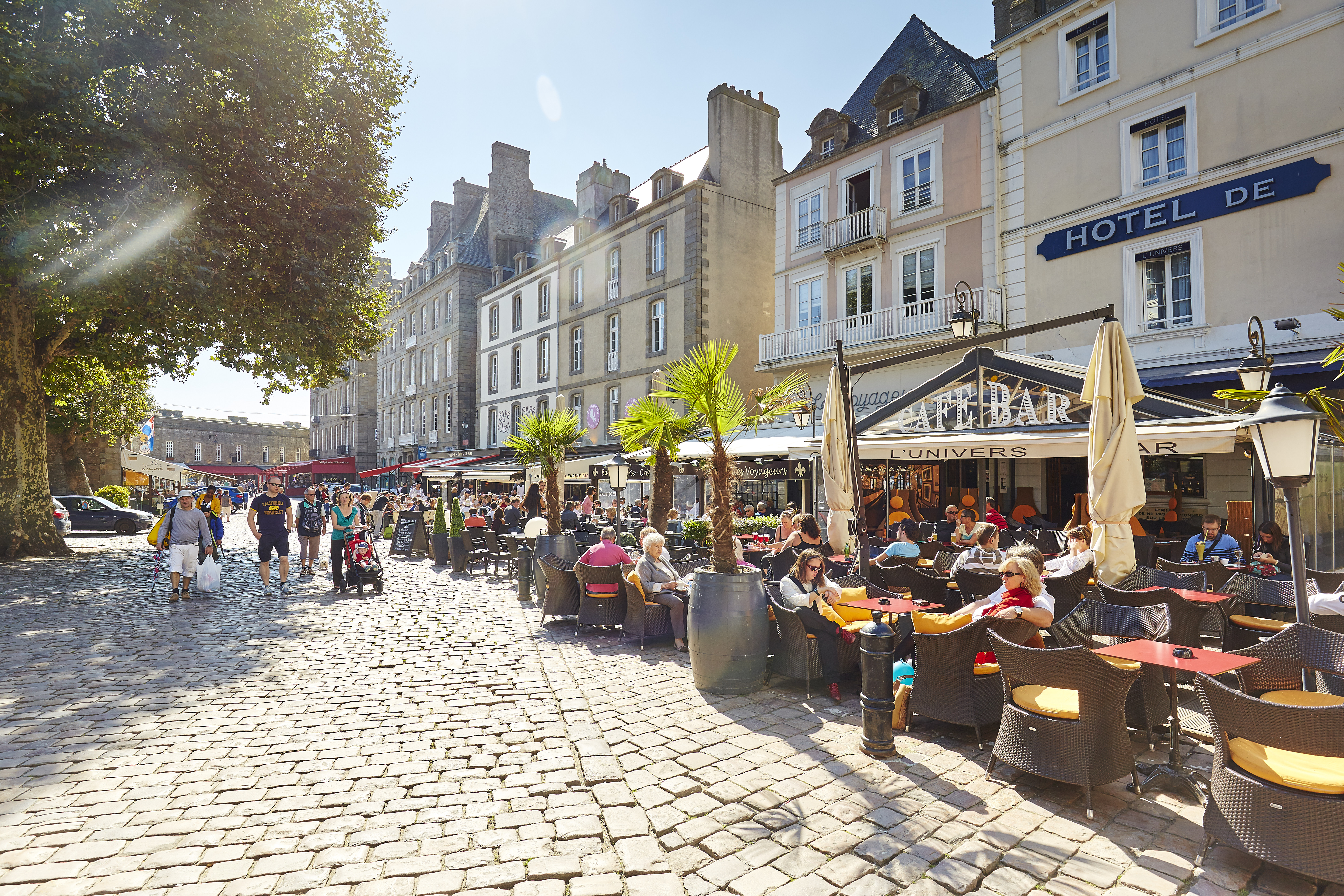
Brittany stretches for hundreds of miles of coastline, and its different areas suit very different holidays. A walled city break in Saint-Malo is a completely different trip from a beach week in Carnac or a walking holiday on the Pink Granite Coast. The best base depends on the kind of holiday you want, and, for UK travellers, on how you arrive.
QUICK CHOICE
Which area is best for you?
If you know what kind of trip you want, start here. Each recommendation is explained in the area sections below.
HOW TO CHOOSE
Three questions that narrow the choice
Before reading the area sections, it helps to fix three things in your mind: what kind of holiday you want, how you are arriving, and how much driving you are prepared to do once in Brittany.
Beaches, walking, history, food, family time or a road trip: the answer changes the best base significantly.
Portsmouth to Saint-Malo puts you in eastern Brittany; Plymouth to Roscoff puts you in the west. Your ferry choice and accommodation area should be decided together.
If you want to minimise driving after the ferry, stay near your arrival port. If you enjoy road trips, a more adventurous base rewards you.
BEST FOR FIRST VISITS
Saint-Malo
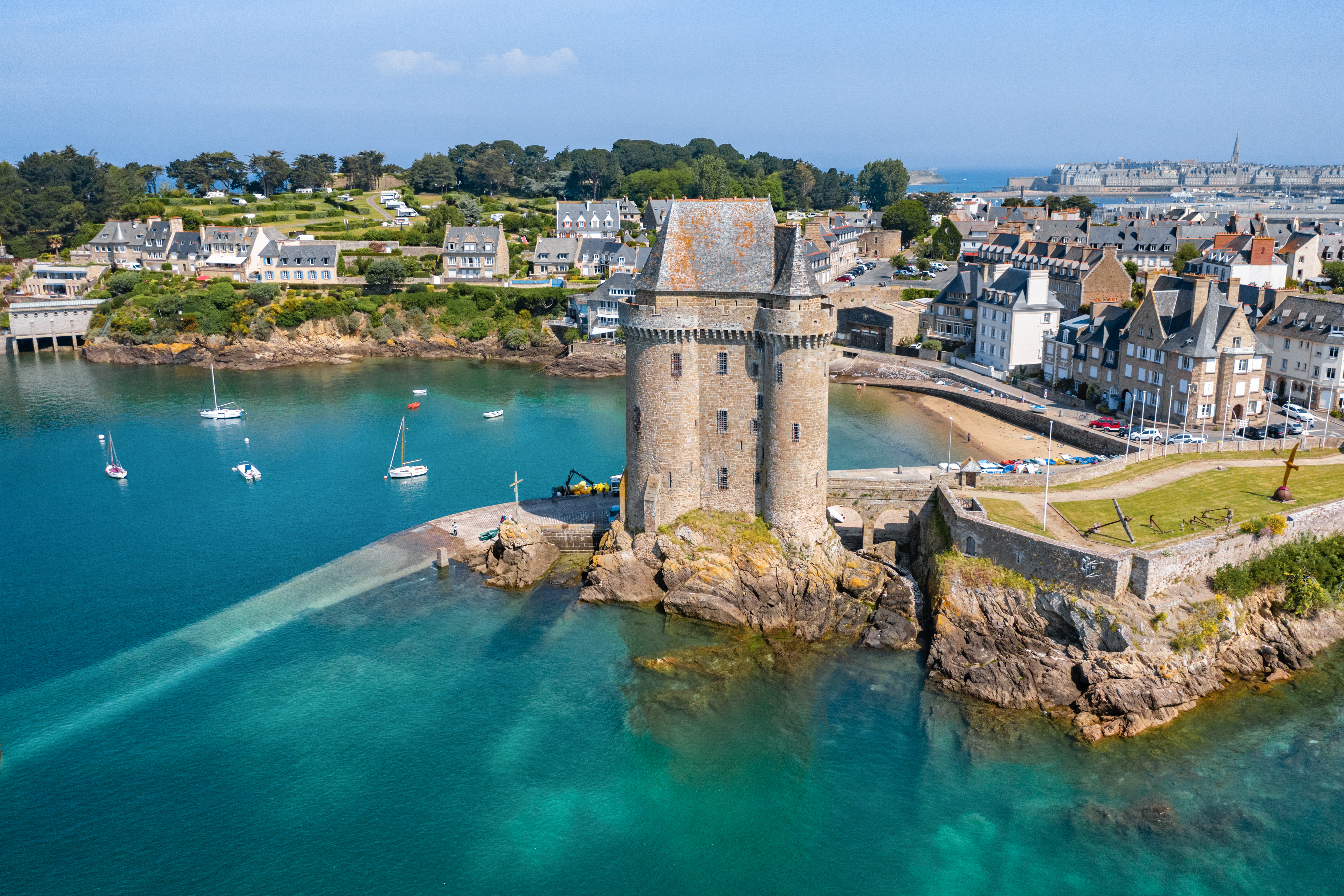
The walled city is the easiest, most rewarding first Brittany base for UK travellers.
Best suited to: First-time visitors · Short breaks · Families wanting walkable stays · Travellers arriving via Portsmouth.
Saint-Malo's Intra-Muros is a compact walled city rebuilt after wartime destruction, sitting directly on the sea. Ramparts, narrow streets, restaurants and beaches are all within walking distance, which makes it unusually convenient for a first Brittany trip.
The city doubles as the principal direct ferry gateway from Portsmouth, meaning you can step off an overnight crossing already inside your destination. From Saint-Malo, Dinard, Cancale, Dinan and the Emerald Coast are all easy day trips.
The main trade-off is that Intra-Muros is busier and more expensive in peak summer, and parking inside the walls is limited. Staying along the Sillon beachfront or just outside the walls gives more space and easier road access while keeping the old town within reach.
BEST FOR HISTORY & ATMOSPHERE
Dinan
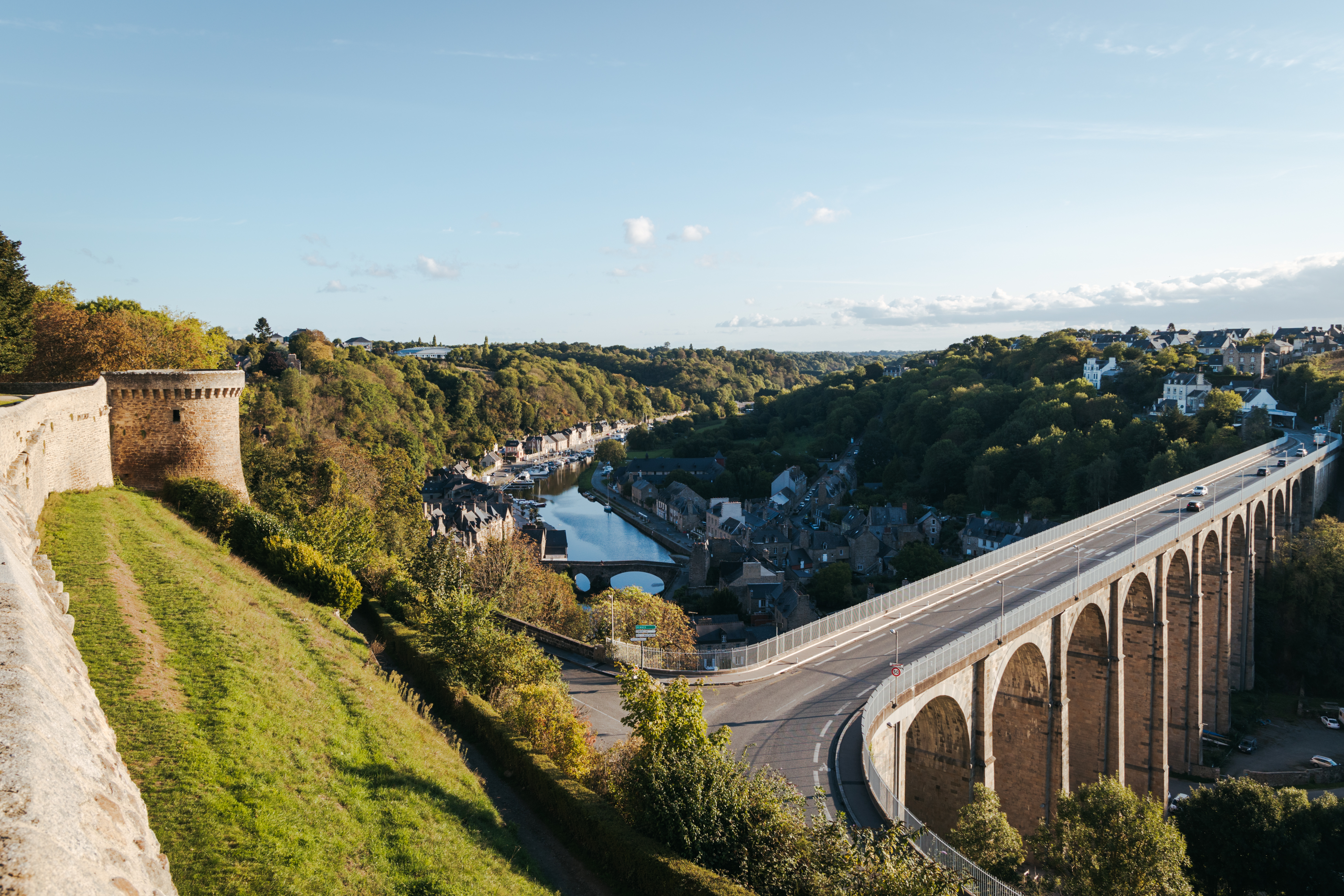
A beautifully preserved medieval town inland from the north coast, ideal for couples and slower-paced trips.
Best suited to: Couples · History and architecture lovers · Slower-paced trips · Writers and walkers.
Dinan is one of Brittany's most complete medieval towns, with half-timbered streets, a 14th-century castle keep, and an old port on the River Rance. It sits inland from Saint-Malo, making it a quieter alternative to the coast for travellers who prefer atmosphere over beaches.
The town is compact and walkable, with art galleries, independent shops, creperies and a strong sense of place. The harbour below the town offers riverside walks and a different pace from the ramparts above.
Dinan works particularly well for couples or as a first or last-night stop on a road trip. It does not have the direct seafront of Saint-Malo or the beach access of Carnac, so it suits travellers whose primary interest is history, food and atmosphere rather than a sand-and-sea holiday.
BEST FOR FAMILY BEACH HOLIDAYS
Carnac & the south coast
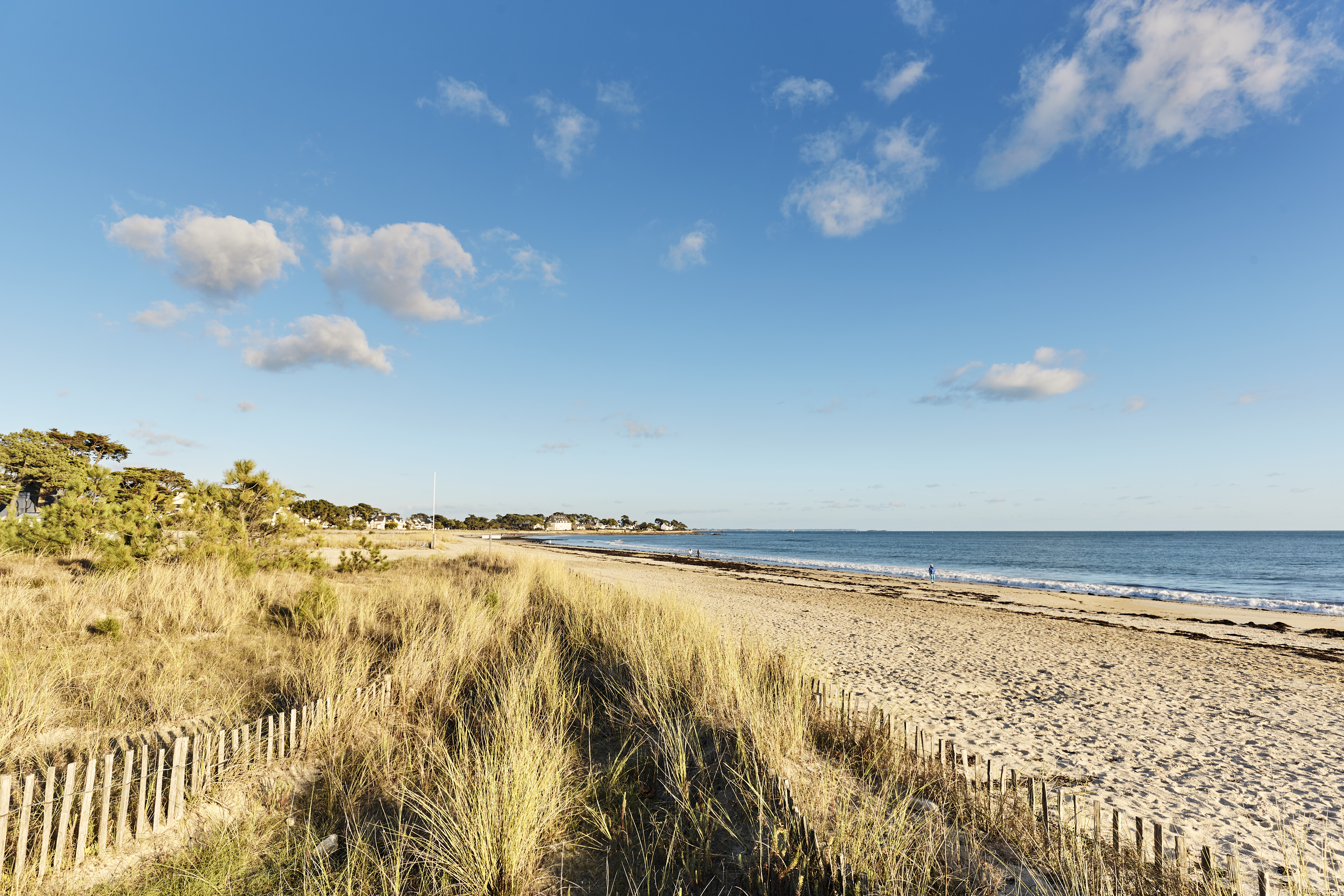
Big sandy beaches, prehistoric sites and a huge choice of family accommodation make this the strongest beach-led family base.
Best suited to: Families with children · Beach-led holidays · Self-catering and campsite stays · Travellers combining beaches with boat trips.
Carnac is one of Brittany's easiest family holiday choices. The beaches around Carnac-Plage are broad, sandy and well served by the kind of infrastructure families need, while the town itself sits beside the famous megalithic alignments.
The wider area, including the Quiberon peninsula, the Gulf of Morbihan and La Trinite-sur-Mer, offers boat trips, island crossings, markets and shallow swimming. A single base here gives access to several different day-trip options, which is particularly useful with children.
This part of Morbihan has the space, beaches and family attractions that suit holiday parks, campsites and self-catering accommodation. It is the strongest part of Brittany for a traditional one-week family beach holiday.
BEST FOR FOOD, CULTURE & ISLANDS
Vannes & the Gulf of Morbihan
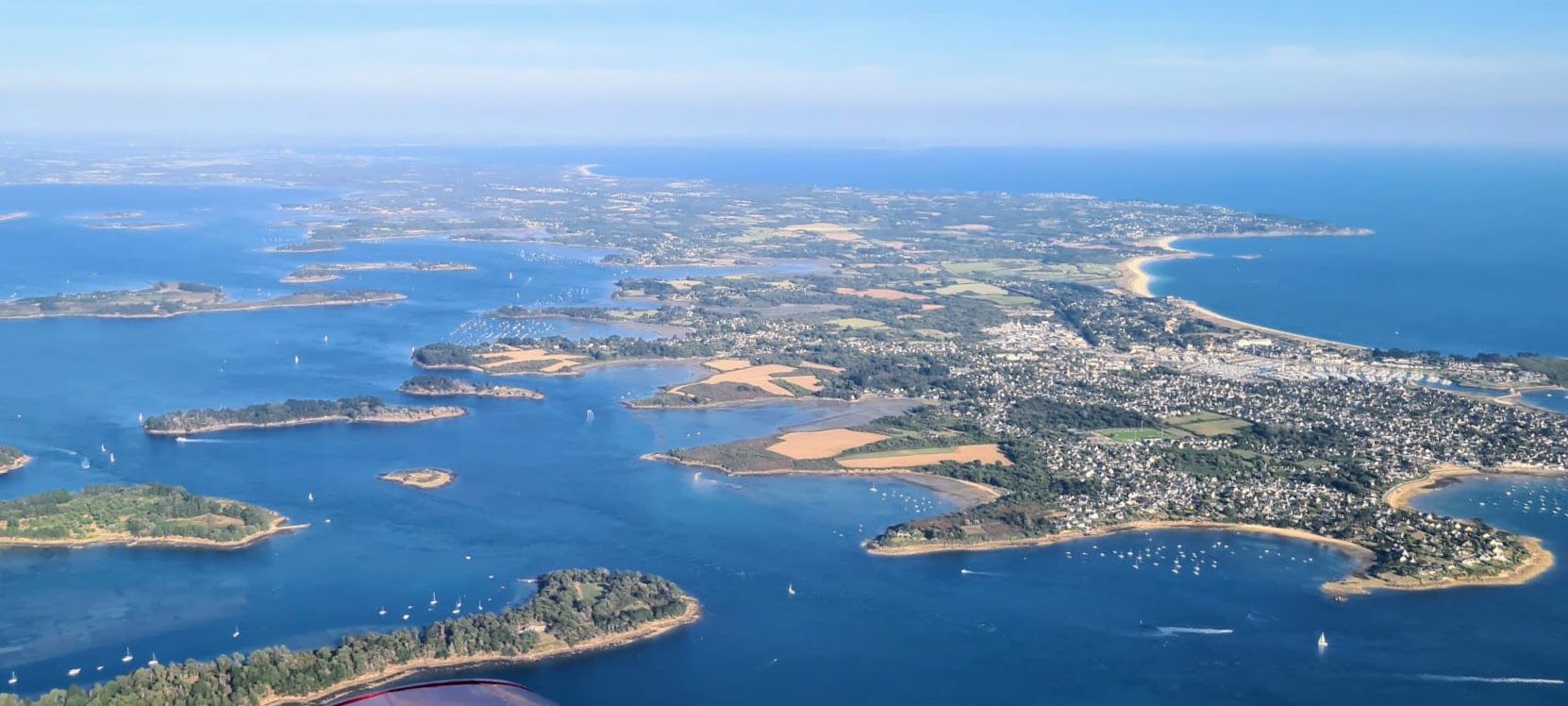
A handsome walled town at the gateway to the Gulf of Morbihan, the strongest all-round southern Brittany base.
Best suited to: Food and restaurant-led trips · Couples and groups · Travellers wanting islands and boat trips · Those combining town and coast.
Vannes is a lively historic city with medieval gates, a harbour, weekly markets and a strong restaurant scene. It sits at the entrance to the Gulf of Morbihan, a sheltered inland sea with dozens of islands, famous for boat trips, sailing and wildlife.
The town itself is genuinely walkable and offers more urban energy than Carnac or Roscoff, with shops, cafes and a cathedral within the old walls. From Vannes, you can take passenger boats to the Ile aux Moines and Ile d'Arz, or drive to the Guerande salt marshes and the Presqu'ile de Rhuys.
Vannes works well for travellers who want a proper town base, restaurants, markets and atmosphere, rather than a purely beach-led holiday. It also pairs naturally with Carnac for a two-base southern Brittany trip.
BEST FOR PLYMOUTH ARRIVALS & WESTERN BRITTANY
Roscoff & northern Finistere
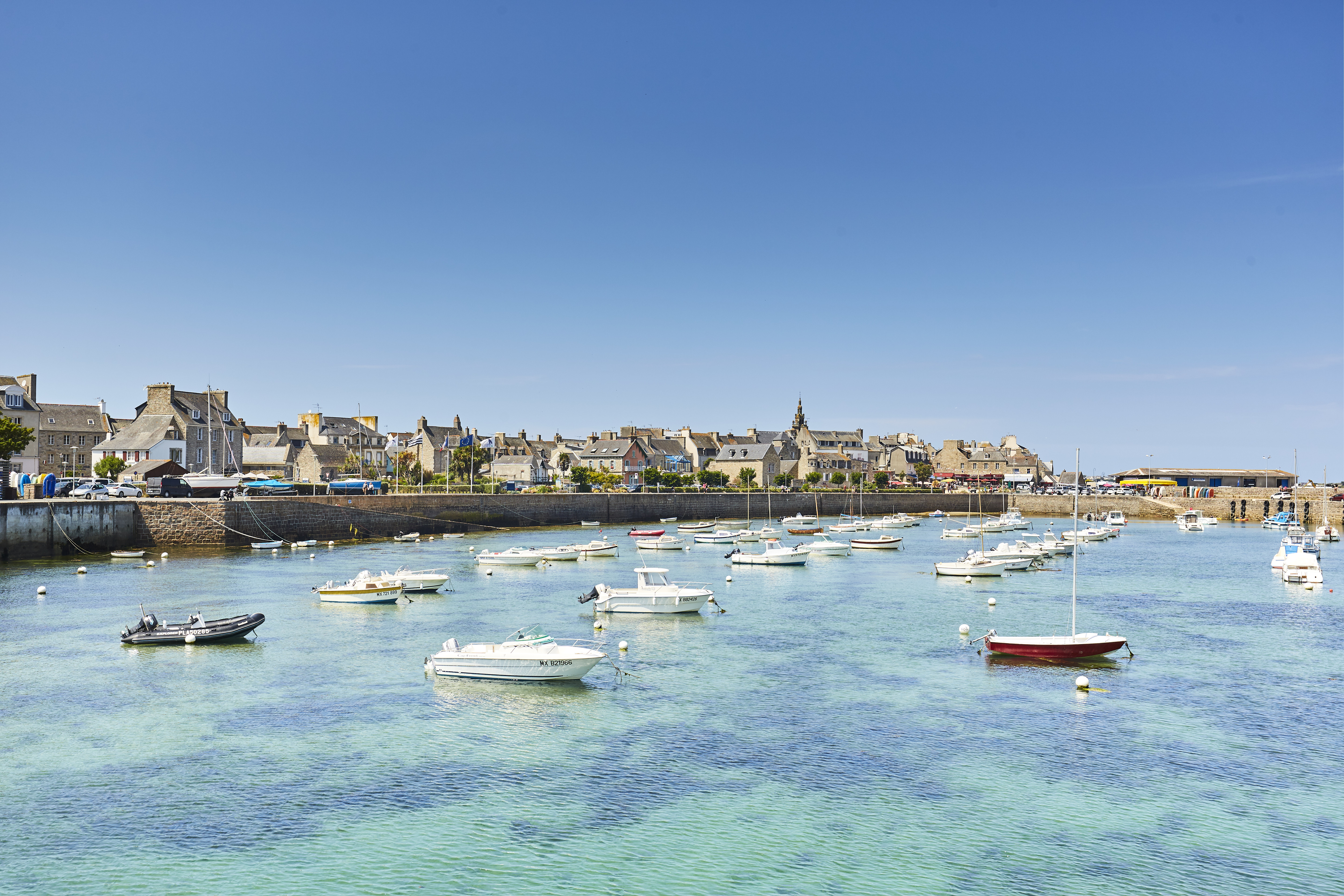
A compact harbour town that doubles as the natural gateway to Finistere, ideal after the Plymouth crossing.
Best suited to: Travellers arriving via Plymouth · Western Brittany explorers · First or final-night stops · Island trips to Batz.
Roscoff is much more than a ferry port. The old town has 16th-century granite houses, a botanical garden, a working harbour and excellent seafood, enough to make it a worthwhile destination in its own right rather than simply somewhere to sleep near the ferry.
It is the natural base for travellers arriving from Plymouth, since you step off the ferry directly into northern Finistere. From Roscoff, the Ile de Batz is a short passenger crossing, and the wild coastline of the Pays de Leon and the Abers stretches west.
Roscoff is quieter and smaller than Saint-Malo. It suits travellers heading into Finistere, those who want a gentler first or final night, and those who value sea views and character over a large-town environment. For a longer holiday, consider coastal bases beyond the town itself.
BEST FOR DRAMATIC COASTLINE & WALKING
The Pink Granite Coast
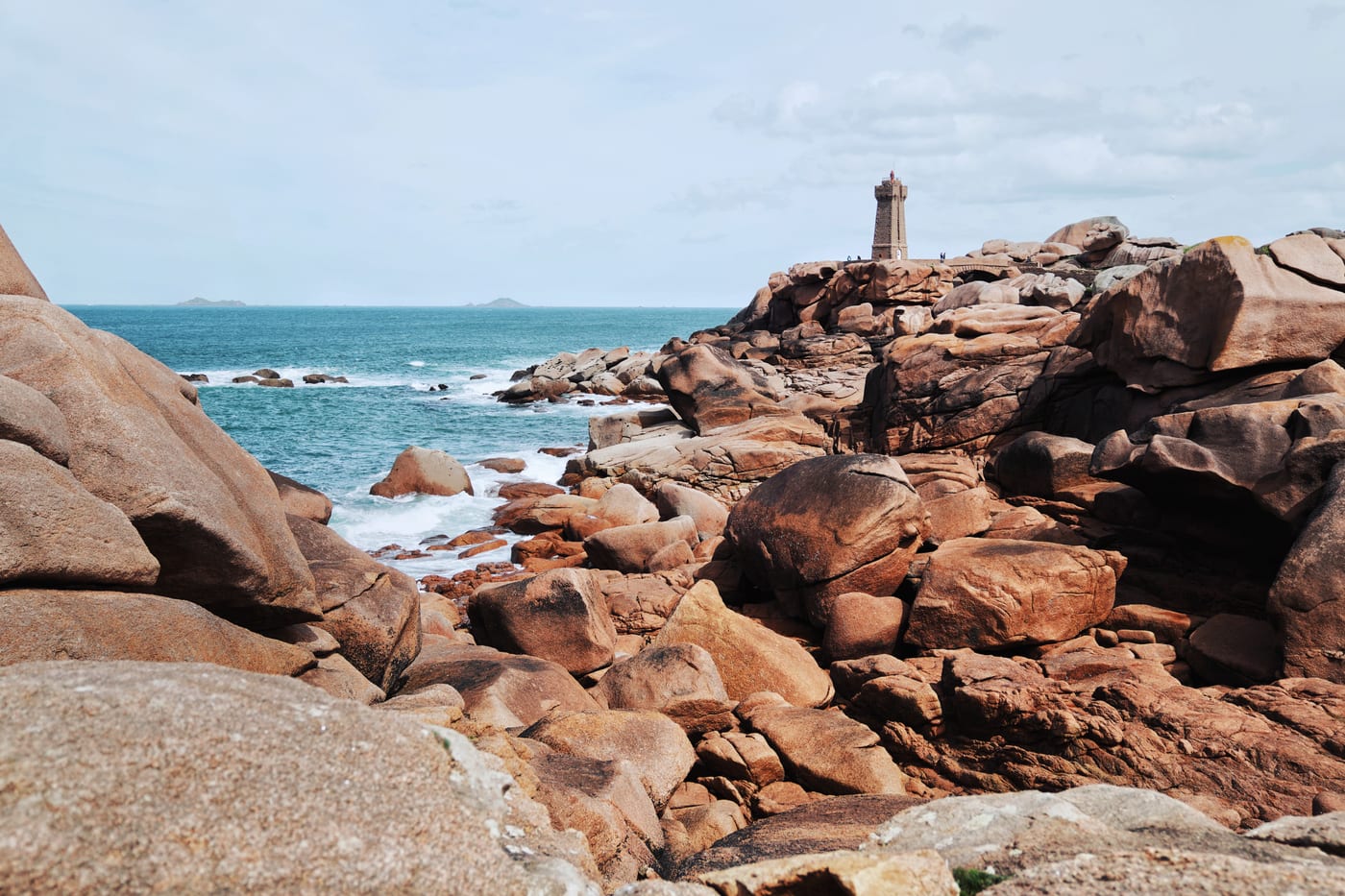
The most visually spectacular stretch of Brittany's coast, with pink rock formations, sheltered coves and the famous GR34 path.
Best suited to: Walkers and hikers · Photographers · Road-trip travellers · Those who want standout scenery.
The Pink Granite Coast (Cote de Granit Rose) is one of Brittany's most distinctive landscapes. Between Trebeurden and Perros-Guirec, the coastline is formed of pink granite boulders shaped by wind and sea into dramatic, sculptural forms. The stretch around Ploumanac'h is among the most photographed coastline in France.
The GR34 coastal path, the Sentier des Douaniers, runs through this section, offering accessible walking with continuous sea views. The beaches here are smaller and more characterful than the broad sands of Carnac, and the area has a more rugged, exploratory feel.
This stretch of northern Brittany is best suited to travellers who want walking, photography and dramatic scenery. It does not have a direct ferry arrival. The nearest ports are Roscoff, around 40 minutes by road, or Saint-Malo, around 90 minutes. It works best as a dedicated base within a road trip rather than a first-night stop.
FERRY CONNECTION
How your ferry choice affects where you stay
One of the advantages of planning a Brittany trip from the UK is that your ferry route and accommodation area can work together. The two direct routes to Brittany, Portsmouth to Saint-Malo and Plymouth to Roscoff, arrive in different parts of the region, and that shapes which areas make the most sense.
Saint-Malo, Dinan, the Emerald Coast and the north coast are immediately accessible. Carnac, Vannes and southern Brittany are a longer but straightforward drive south on dual carriageway.
Roscoff, northern Finistere, the Pink Granite Coast and western Brittany are within easy reach. Southern Brittany is a longer drive, so if you are heading to Carnac or Vannes, compare the total journey before committing.
Arriving in Caen or Cherbourg can work for eastern and southern Brittany if it produces a better total journey from your UK starting point, but it adds French road miles. Compare the complete door-to-door journey rather than the ferry alone.
The important principle is to choose your area and your ferry together rather than separately. Use the Route Finder to compare the UK drive, crossing and French road leg for your specific starting point and destination.
NEXT STEP
From area to accommodation
Once you have chosen the part of Brittany that suits your trip, the next step is choosing the right type of accommodation within that area. Our stay hub covers hotels, campsites, gites and self-catering options, with dedicated guides for several of the areas above.