Brittany is a large region, and no single holiday will take in everything. The experiences below are organised by type — historic towns, coast, islands, forests and cultural attractions — so you can identify what appeals and then connect it to the right part of the region and the right ferry port. Each entry explains what the experience is, where it sits, who it suits and what it combines with naturally.
HISTORIC TOWNS AND WALLED CITIES
Historic towns and walled cities
Brittany's medieval towns are its most accessible attractions. Several retain their defensive walls almost intact, and the old centres are a pleasure to wander without a plan. The four below are the headline acts; Rennes and Concarneau are worth knowing about too.
Saint-Malo
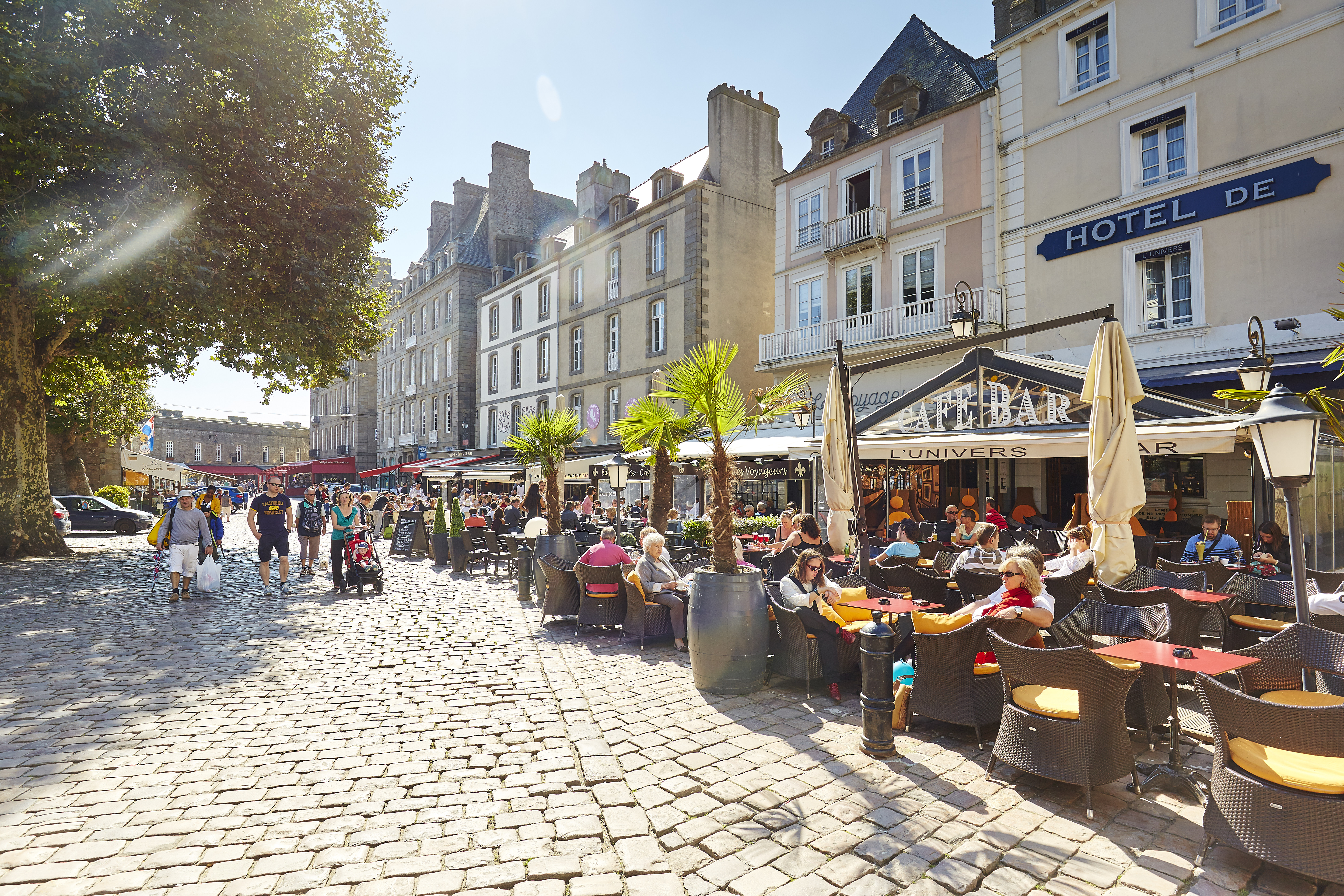
The corsair city on the Emerald Coast is Brittany's most recognisable walled town. A walk around the ramparts — roughly 1.7 km of granite wall — gives views over the beaches, the harbour and the island forts that appear at low tide. The old town was largely rebuilt after the Second World War, faithfully following the original street plan. Saint-Malo suits first-time visitors, families and anyone who wants a compact, atmospheric base within a short drive of the ferry port. It combines naturally with the nearby headland at Cancale and the cliffs of Cap Fréhel. See our Saint-Malo destination guide for more detail.
Dinan
Inland on the Rance valley, Dinan is one of the best-preserved medieval towns in Brittany. It has around 130 half-timbered houses, nearly two miles of ramparts and the steep cobbled Rue du Jerzual leading down to the river port. Dinan appeals to history lovers and photographers, and makes a good pairing with Saint-Malo or the Cap Fréhel coast. See our Dinan destination guide.
Vannes
On the Gulf of Morbihan, Vannes has intact medieval walls, half-timbered houses around Place des Lices and a pleasant marina. The Ramparts Garden, a public park running along the old fortifications, is a highlight. Vannes is a good base for exploring the southern coast and the Gulf islands, and suits couples and families. See our Vannes destination guide.
Quimper
Deep in Finistère, Quimper is considered the cultural capital of Brittany. Its Gothic Saint-Corentin Cathedral has mismatched spires and fine stained glass, and the old town follows its medieval street plan with timber-framed houses and faience workshops. Quimper suits culture lovers and anyone exploring western Brittany. The cathedral and old town are free to enter.
Rennes and Concarneau
Rennes, the regional capital, has over 370 half-timbered houses in its old town and a Saturday food market that is among the largest in France. It is a good city-break option and a useful stop on the drive south from Saint-Malo. Concarneau, on the south coast, has a 14th-century walled Ville Close on an island reached by a stone bridge — one of the most visited monuments in Brittany and free to enter.
PREHISTORIC BRITTANY
Prehistoric Brittany
Carnac alignments
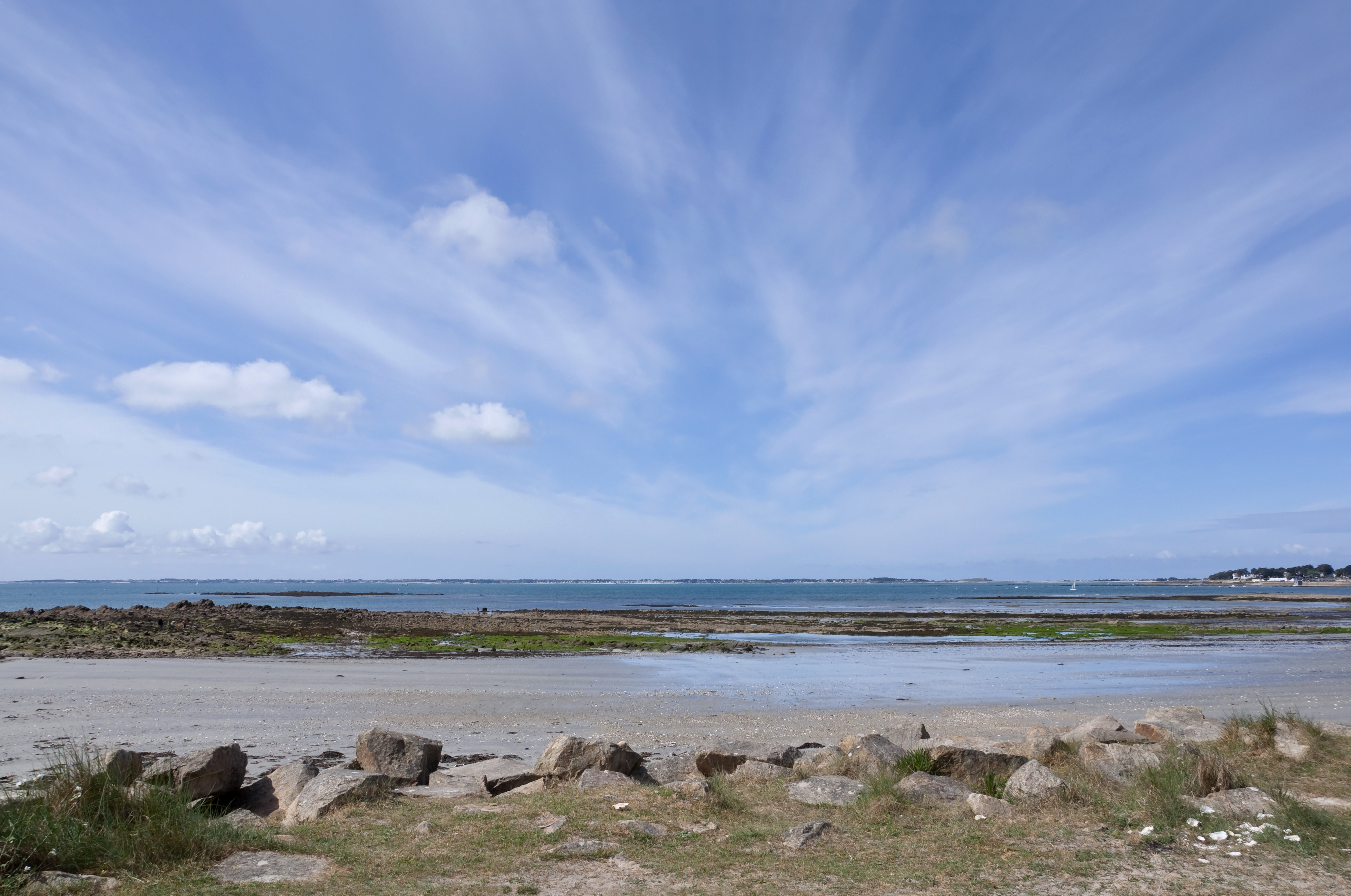
Around 3,000 standing stones arranged in rows stretching for several kilometres make Carnac one of the most extraordinary prehistoric sites in Europe. The stones were erected around 3,300 BC, and their purpose remains debated. The alignments can be viewed from the roadside year-round. Walking among the stones is subject to seasonal arrangements: access is generally free from October to March, while from April to September it is restricted to guided tours. Check the official Maison des Mégalithes site for current access details before travelling. Carnac suits everyone, including families, and pairs well with the southern coast and the Gulf of Morbihan. See our Carnac destination guide.
COAST AND COASTAL WALKS
Coast and coastal walks
Brittany's coastline is its greatest asset. The GR34, also known as the Sentier des Douaniers, follows the entire Breton coast for roughly 2,000 km. You do not need to tackle it all — any section makes a rewarding half-day walk. Temporary closures and diversions can occur after winter storms, so check locally if you are planning a specific stretch.
Pink Granite Coast
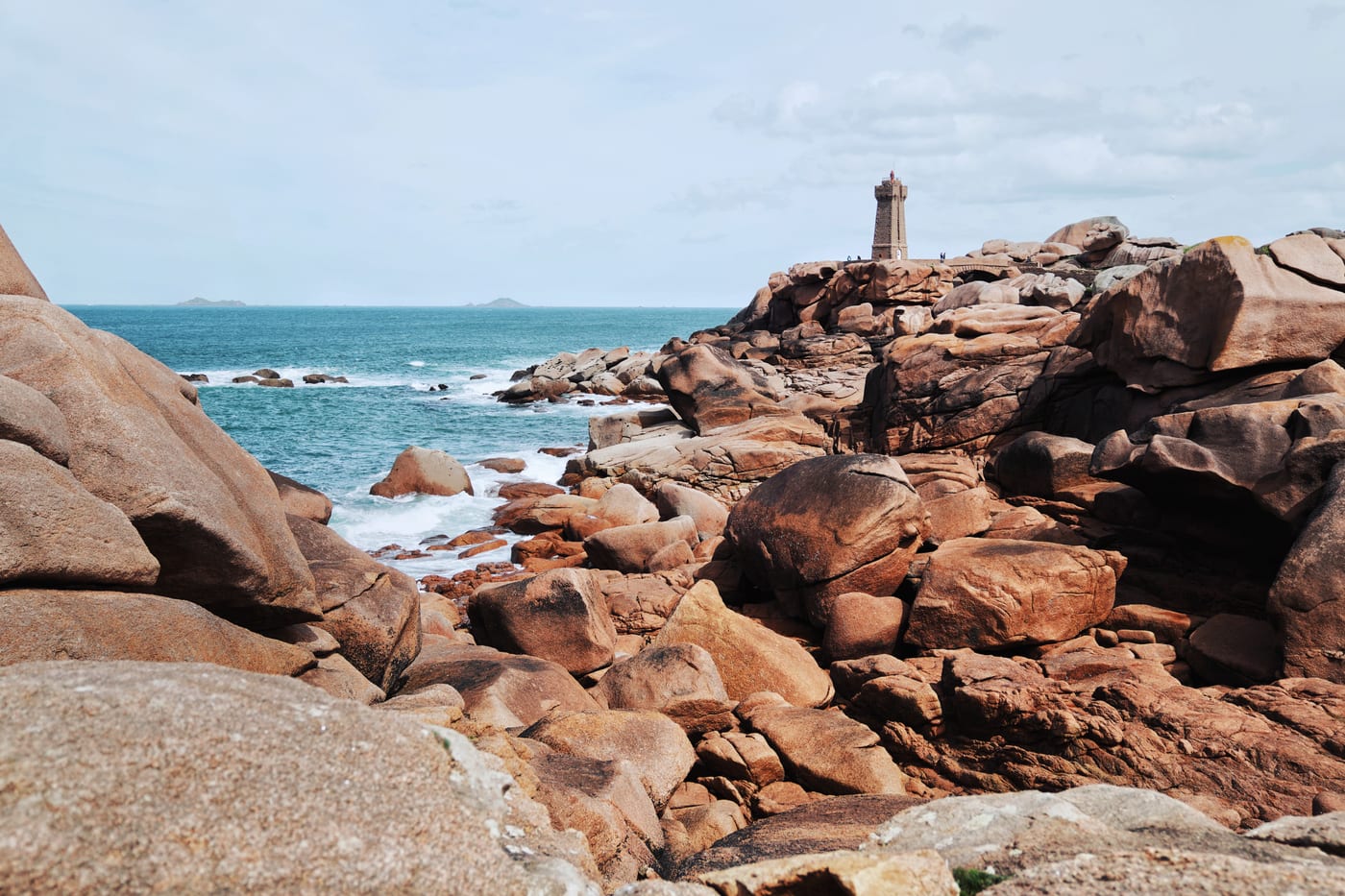
Between Perros-Guirec and Ploumanac'h on the north coast, the granite rocks take on a distinctive pink hue, sculpted by wind and sea into extraordinary shapes. The section of the GR34 between the two is one of the most photographed walks in France. The coastline stretches for about 16 km and is free to explore on foot. The Pink Granite Coast suits everyone and is particularly rewarding at sunset. It is also striking from the water — see our guide to kayaking the Pink Granite Coast for a different perspective.
Cap Fréhel and Fort La Latte
On the Emerald Coast east of Saint-Malo, Cap Fréhel rises to cliffs over 70 metres high with one of the finest panoramas in Brittany. The lighthouse and cliff-top walk are free. About 4 km along the GR34 stands Fort La Latte, a 14th-century castle perched on the rocks. The fort is open seasonally — check the official site for current opening and admission information before travelling. The two combine into a good half-day of walking and sightseeing.
Pointe du Grouin and Cancale
Just east of Saint-Malo, the Pointe du Grouin is a dramatic headland overlooking the Bay of Mont-Saint-Michel. The nearby fishing port of Cancale is famous for its oysters, sold from stalls along the harbour wall. The headland walk is free, and the oyster market is a genuine Breton experience. This area pairs naturally with a stay in Saint-Malo.
ISLANDS
Islands
Brittany's offshore islands are among its most distinctive experiences. Several are car-free, reached by short ferry crossings, and offer a slower pace and a different landscape from the mainland.
Belle-Île-en-Mer
The largest of the Breton islands, Belle-Île sits about 14 km off the Quiberon peninsula. A ferry from Quiberon takes around 45 minutes. The island has dramatic cliffs at the Aiguilles de Port-Coton, a citadel at Le Palais and quiet cycling routes. It suits day-trippers and those who want to stay overnight. Ferry schedules vary by season — check the operator's site before travelling. See our islands and boat trips guide for more.
Île de Bréhat
Off the north coast near Paimpol, Bréhat is a car-free island with a mild microclimate that supports subtropical gardens on its southern side and wild heathland to the north. A 10-minute ferry crossing from the Pointe de l'Arcouest puts you on the island, where walking and cycling are the only ways to get around. Bréhat suits walkers and anyone seeking a quiet day away from the car. See our islands and boat trips guide.
FORESTS AND INLAND BRITTANY
Forests and inland Brittany
Brittany's interior is less visited than the coast but has its own character — ancient forest, legend and unusual geology.
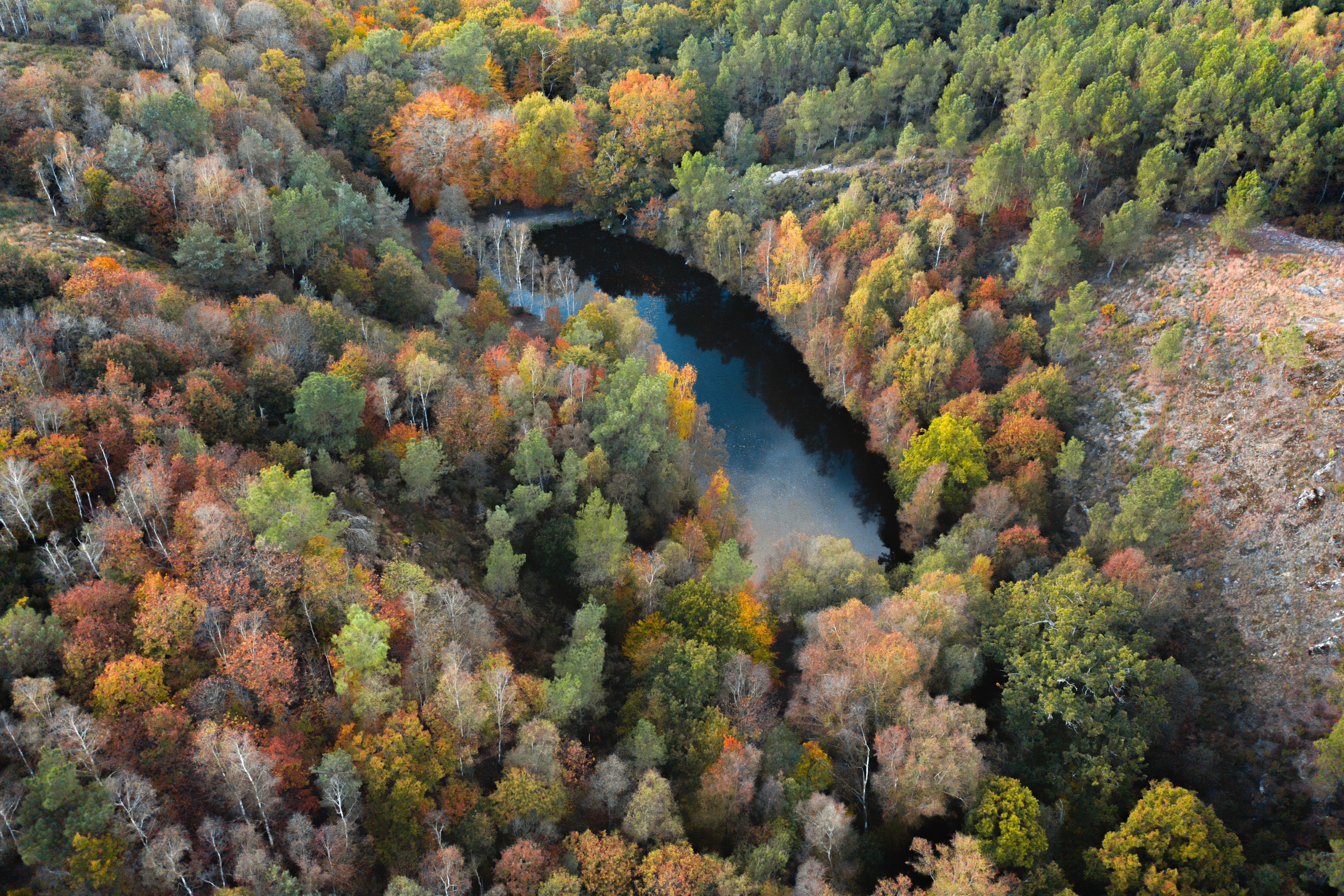
Brocéliande (Paimpont Forest)
The forest of Brocéliande, identified with the Paimpont Forest in central Brittany, is associated with the legends of King Arthur and Merlin. The Valley of No Return and Merlin's Tomb are among the sites linked to the legends. The forest is free to explore and suits walkers, families and anyone drawn to the mystical side of Brittany. A visitor centre provides context and maps.
Huelgoat Forest
In Finistère, the forest of Huelgoat is known for its enormous moss-covered granite boulders, which appear to have been scattered by a giant. A roughly one-kilometre trail from the village leads past the Moulin du Chaos and a series of rock formations with names from Breton legend. Huelgoat is free to explore and suits walkers and photographers looking for something off the beaten path.
CASTLES, CULTURE AND DISTINCTIVE EXPERIENCES
Castles, culture and distinctive experiences
Château de Fougères
On the eastern edge of Brittany, the Château de Fougères is one of the largest medieval fortresses in Europe, with origins in the 10th century and fortifications that reflect centuries of conflict on the Marches of Brittany. The castle sits on a two-hectare site and can be explored with an audio guide. A combined ticket is available with La Coursive, an architecture and heritage centre at the foot of the castle. Check the official site for current opening and admission information. Fougères suits history lovers and families, and makes a good stop on the drive from the ferry ports into central Brittany.
Océanopolis, Brest
Océanopolis in Brest is Brittany's leading family attraction — an aquarium and ocean discovery centre divided into three pavilions covering Breton, polar and tropical marine environments. It suits families and anyone interested in marine life. Check the official site for current opening and admission information. Océanopolis is a reliable option for a rainy day on the western coast, though for a wider selection of wet-weather attractions across Brittany see our guide to Brittany's best museums.
Pont-Aven
The small town of Pont-Aven on the Aven estuary in Finistère is famous as the home of the Pont-Aven School of painters, led by Paul Gauguin in the late 19th century. The Bois d'Amour and the tidal mills are associated with the artists who worked here, and the Musée de Pont-Aven holds a significant collection. The town itself is free to wander. Pont-Aven suits art lovers and couples exploring western Brittany. Check the museum's official site for current opening and admission information.
Rochers Sculptés de Rothéneuf
Just east of Saint-Malo, the Rochers Sculptés are an extraordinary ensemble of over 300 granite sculptures carved into the coastal cliffs between 1894 and 1907 by a local priest, the Abbé Fouré. It is a distinctive example of outsider art and an unusual addition to the Brittany coast. Check the official site for current opening and admission information. The site pairs naturally with a visit to Saint-Malo.
FREE THINGS TO DO
Free things to do in Brittany
Many of Brittany's most memorable experiences do not require an admission ticket. The following are genuinely free or free to access in their most basic form.
- Walk a section of the GR34: the entire coastal path is free, including the famous stretch between Perros-Guirec and Ploumanac'h on the Pink Granite Coast.
- Walk the Saint-Malo ramparts: the 1.7 km circuit is free and open year-round.
- Wander the Vannes ramparts garden: the public park along the medieval walls is free.
- Enter Concarneau's Ville Close: the walled town on its island is free to enter.
- Explore Brocéliande and Huelgoat forests: both are free to walk.
- Browse a Breton market: weekly markets in every town are free to wander, including the Marché des Lices in Rennes.
- Visit Quimper Cathedral: Saint-Corentin Cathedral is free to enter.
- Take in the Cap Fréhel viewpoint: the cliffs and lighthouse walk are free (Fort La Latte is paid).
- Enjoy any public beach: Brittany's hundreds of beaches are free.
For Carnac, the standing stones can be viewed from the roadside year-round at no cost. Walking among the alignments is subject to seasonal arrangements — free in the winter months, restricted to paid guided tours in the main tourist season. Check the Maison des Mégalithes site for current details. For more budget-conscious planning, see our guide to visiting Brittany on a budget.
PLAN YOUR BRITTANY TRIP
Plan your Brittany trip
Once you have a sense of what you want to do, the next decisions are where to base yourself and how to get there. Brittany is large enough that a brilliant beach or attraction can be a poor day trip from the wrong coast, so it is worth matching your interests to the right region and the right ferry.
Match your base to the experiences that matter most to you. See our guide to where to stay in Brittany.
Two direct ferry routes serve Brittany from the UK. See ferries to Brittany from the UK, or the route-specific guides for Plymouth to Roscoff and Portsmouth to Saint-Malo.
Use the Route Finder to compare the complete door-to-door journey before booking.
For more ideas, browse the Things to do hub by experience type.
A short contextual note: the iconic Mont-Saint-Michel sits just across the border in Normandy, but it is a feasible day trip from the Saint-Malo area if your itinerary allows. It is not a Brittany destination, but its proximity makes it worth knowing about.