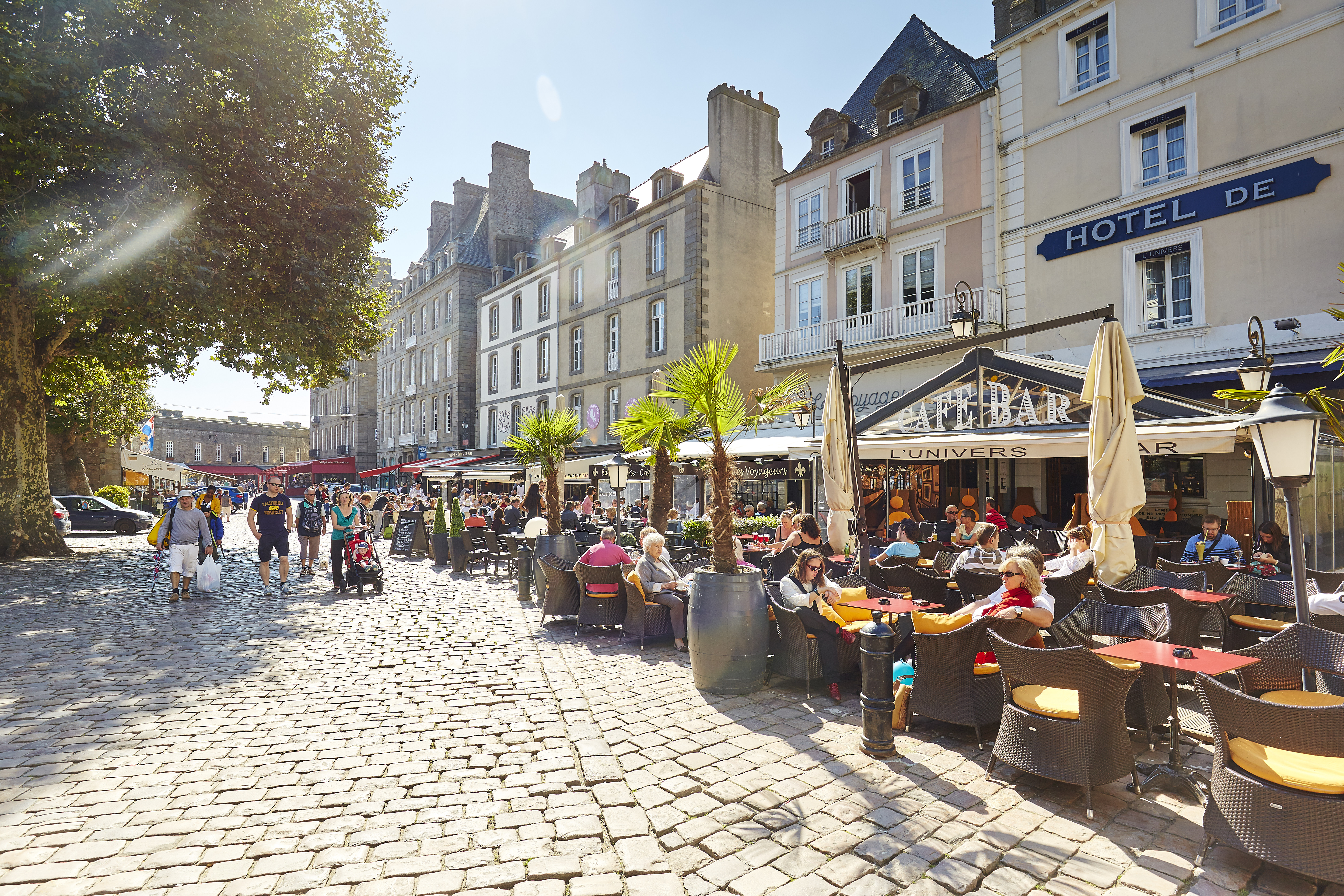
Brittany ranges from walled towns and working ports to granite villages and artists' towns. This is not an attempt to rank every pretty settlement in the region. Instead, we have picked places with distinct reasons to visit, then explained where each fits into a practical Brittany holiday.
QUICK CHOICE
Which place is best for you?
If you know what kind of experience you want, start here. Each recommendation is explained in the sections below.
MAJOR TOWNS
Towns worth knowing first
These five towns give you a useful cross-section of Brittany and connect cleanly with the ferry routes. Each has a detailed destination guide; here we give you enough to decide whether it appeals.
WALLED COASTAL CITY
Saint-Malo
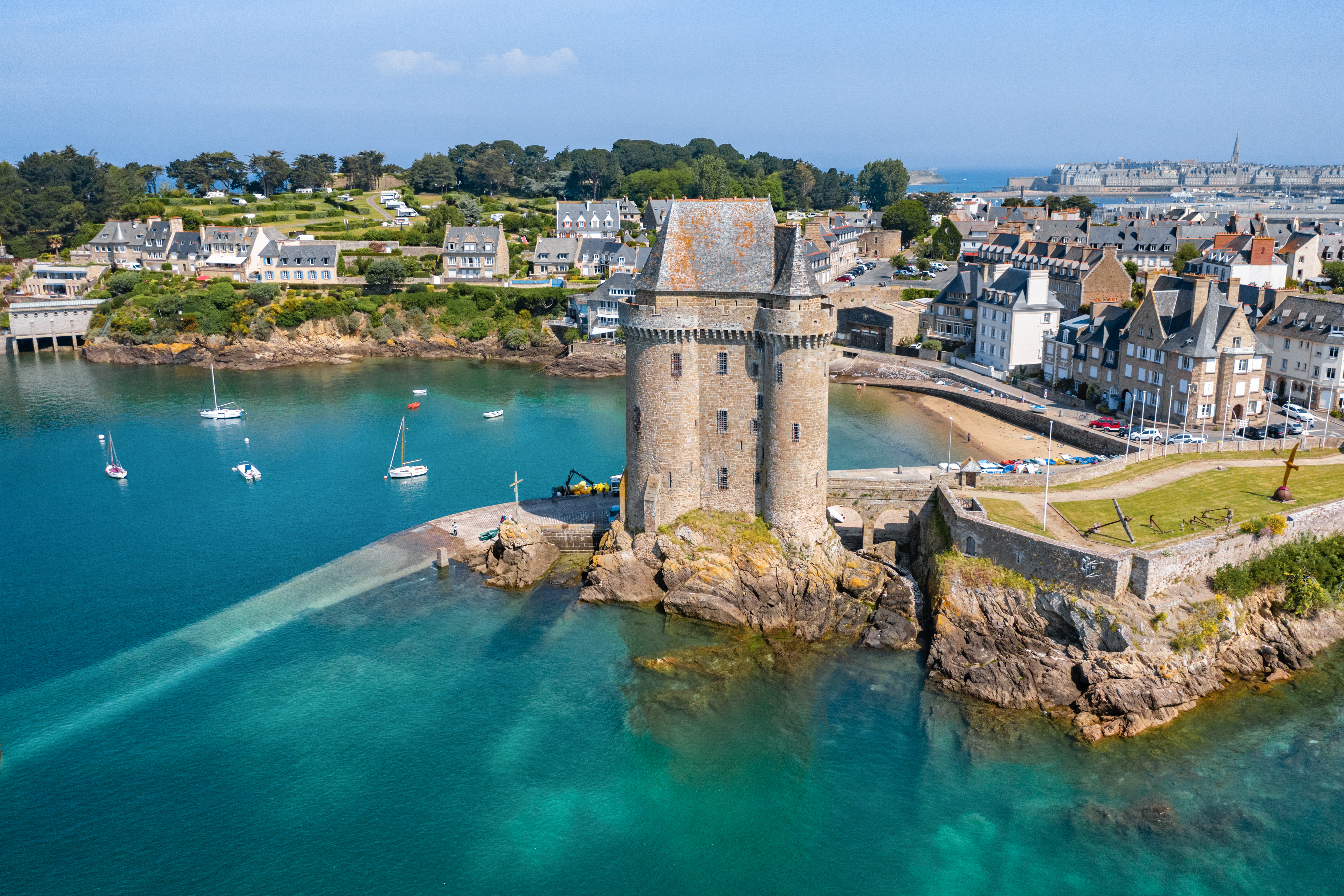
The walled corsair city that most UK visitors encounter first, and the natural starting point for a first Brittany trip.
Saint-Malo's Intra-Muros is a compact walled city rebuilt after wartime destruction, sitting directly on the sea. Ramparts, narrow streets, restaurants and beaches are all within walking distance, which makes it unusually convenient for a first Brittany trip.
The city doubles as the principal direct ferry gateway from Portsmouth, meaning you can step off an overnight crossing already inside your destination. From Saint-Malo, Dinard, Cancale, Dinan and the Emerald Coast are all easy day trips.
MEDIEVAL INLAND TOWN
Dinan
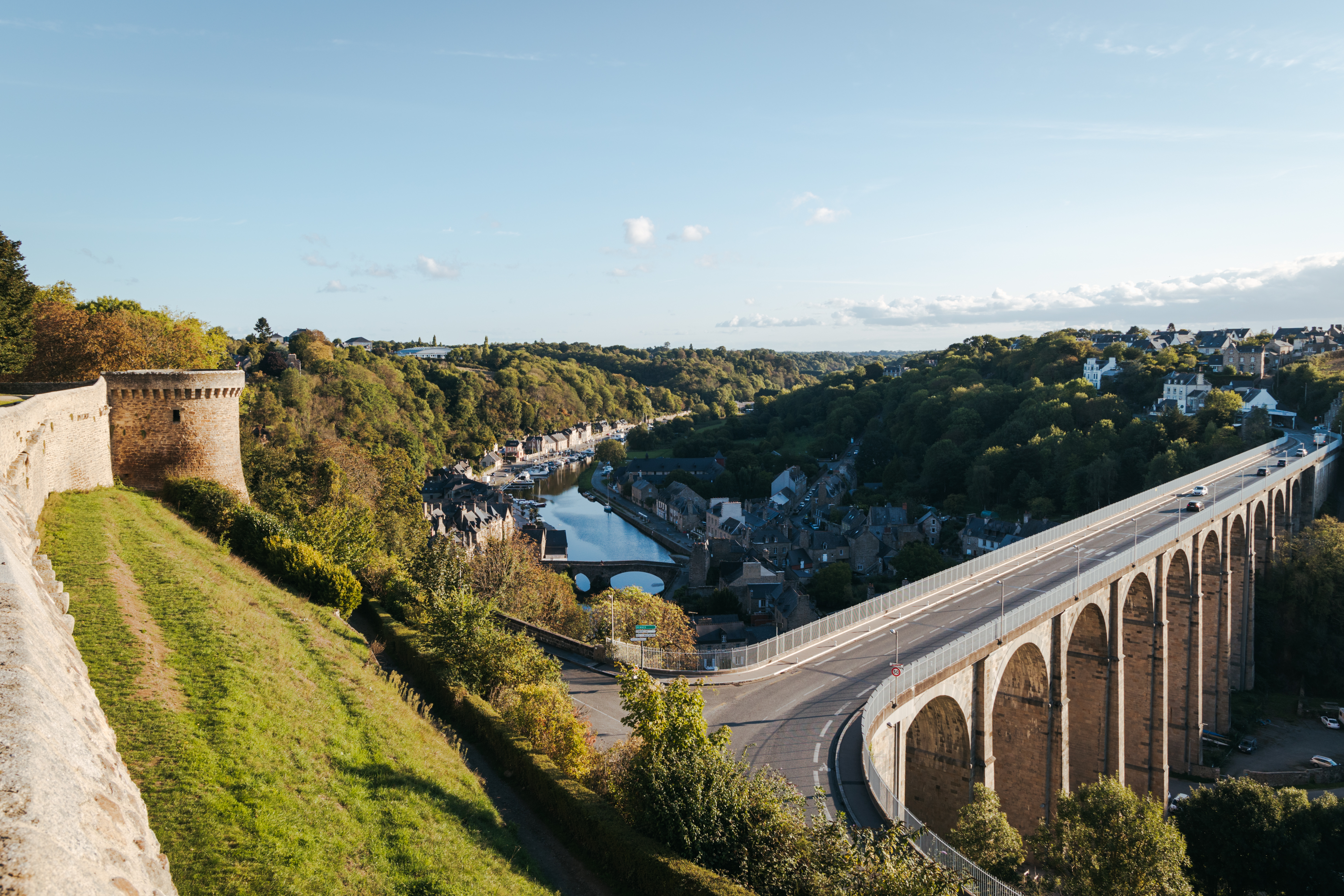
One of Brittany's most complete medieval towns, with half-timbered streets, a 14th-century castle keep and an old port on the River Rance.
Dinan sits inland from Saint-Malo, making it a quieter alternative to the coast for travellers who prefer atmosphere over beaches. The town is compact and walkable, with art galleries, independent shops and creperies.
The harbour below the town offers riverside walks and a different pace from the ramparts above. Dinan works particularly well for couples or as a first or last-night stop on a road trip.
WALLED SOUTHERN TOWN
Vannes
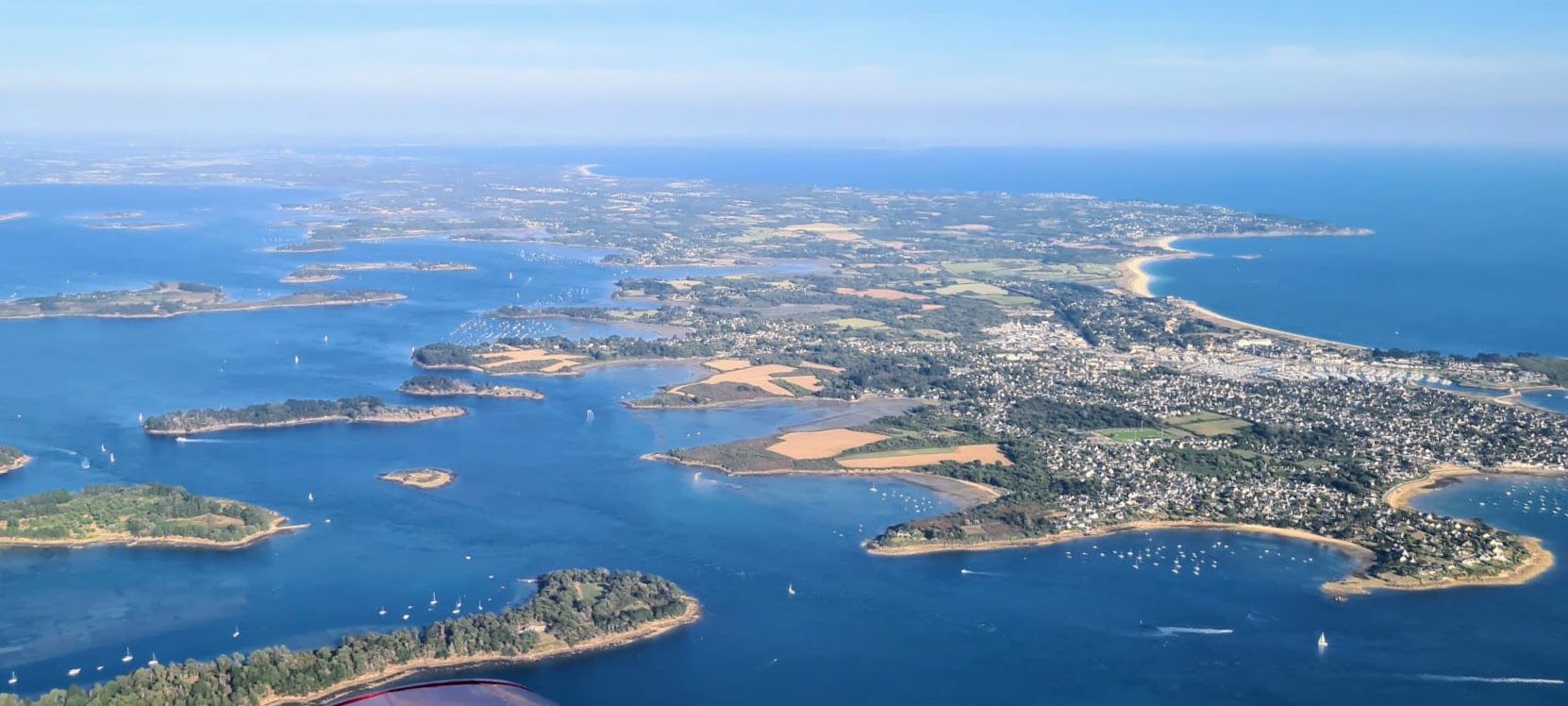
A lively historic city at the gateway to the Gulf of Morbihan, with medieval gates, a harbour and a strong restaurant scene.
Vannes offers more urban energy than the smaller villages, with shops, cafes and a cathedral within the old walls. From here, you can take passenger boats to the Ile aux Moines and Ile d'Arz, or drive to the Guerande salt marshes.
It works well for travellers who want a proper town base, restaurants and markets, rather than a purely beach-led holiday.
BEACHES AND MEGALITHS
Carnac
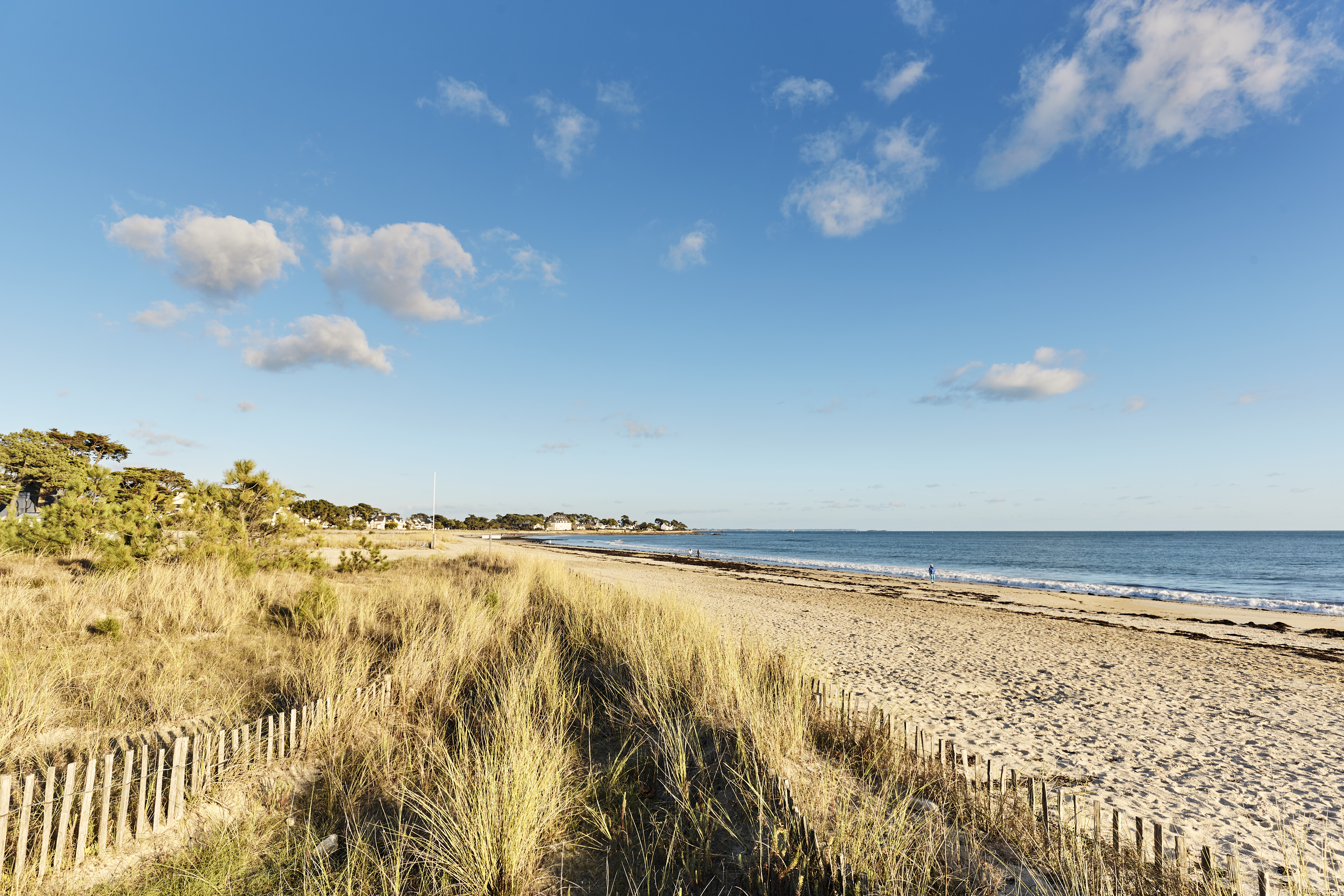
Famous for its prehistoric stone alignments and broad sandy beaches, Carnac is a different kind of discovery.
The beaches around Carnac-Plage are broad, sandy and well served by the kind of infrastructure families need, while the town itself sits beside the famous megalithic alignments.
The wider area, including the Quiberon peninsula and the Gulf of Morbihan, offers boat trips, island crossings, markets and shallow swimming.
GRANITE HARBOUR TOWN
Roscoff
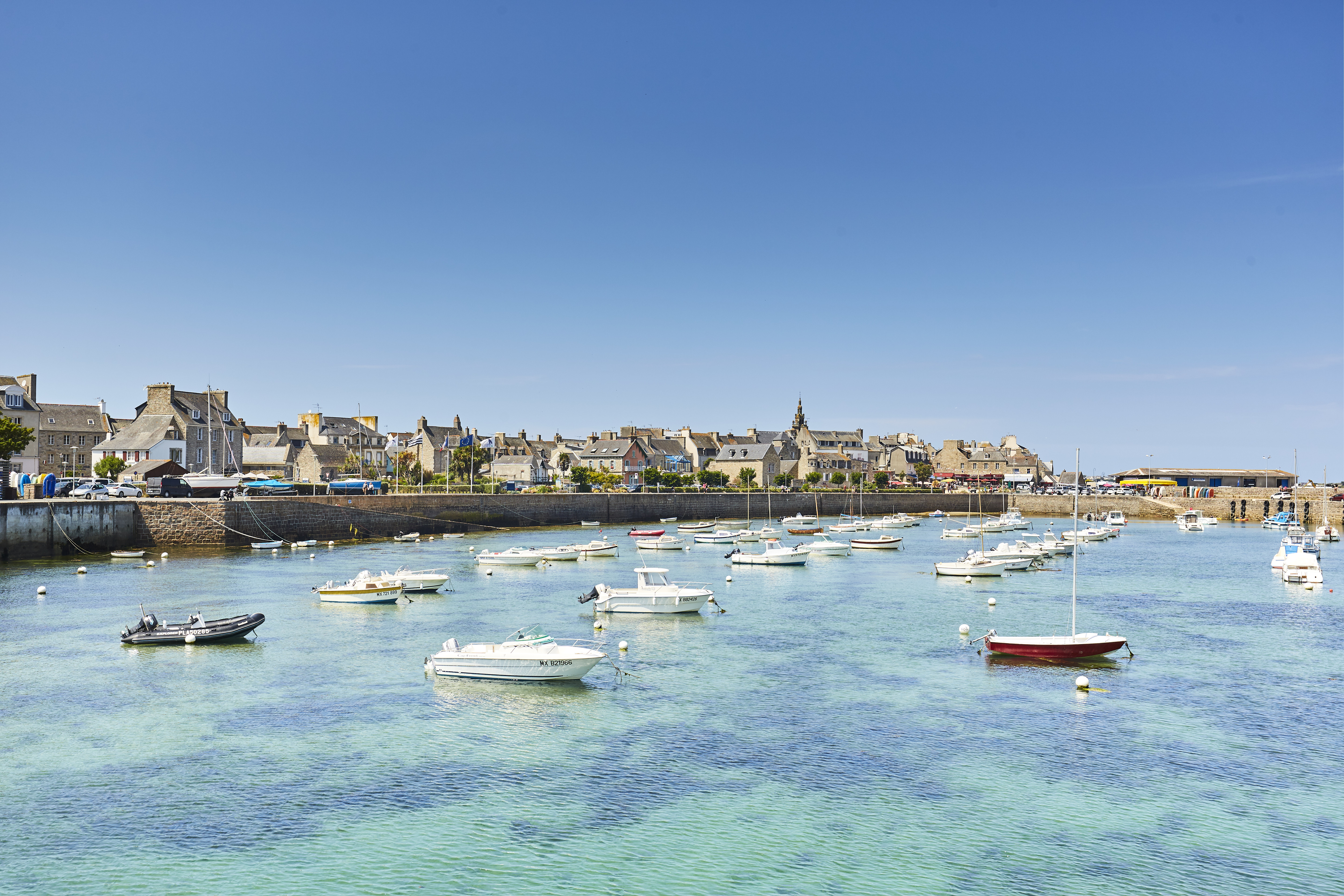
A compact harbour town that is a destination in its own right, not just a ferry port.
The old town has 16th-century granite houses, a botanical garden, a working harbour and excellent seafood. Roscoff is the natural base for travellers arriving from Plymouth, since you step off the ferry directly into northern Finistere.
From Roscoff, the Ile de Batz is a short passenger crossing, and the wild coastline of the Pays de Leon and the Abers stretches west.
SMALL TOWNS AND VILLAGES
Eight places with distinct reasons to visit
These smaller destinations get fuller profiles because they do not have dedicated destination pages. Each is chosen for what makes it genuinely different, not merely for being picturesque.
CLASSIC GRANITE VILLAGE
Locronan
The strongest preserved granite village in Brittany, with a textile-trade past and a distinctive visual identity unlike any other selection.
Best suited to: Photographers · First-time visitors to western Brittany · Travellers on a Finistere road trip.
Locronan has been a member of Les Plus Beaux Villages de France since 1982, making it the oldest labelled village in Brittany. Its wealth came not from fishing but from the linen canvas trade, which funded the granite buildings that give the village its character today.
The 15th-century Church of Saint-Ronan dominates the main square, and the Chapel of Penity nearby houses the tomb of Saint Ronan. The Grande Tromenie, a sacred procession marked by granite crosses and small statue-huts along a 12km route, is held every six years, with a smaller Petite Tromenie annually.
Locronan is inland, in the Monts d'Arree foothills of southern Finistere. It is not coastal and not river-based, which distinguishes it from the port and estuary towns on this list. Its granite-only architecture and absence of half-timbering set it apart from Rochefort-en-Terre and Dinan.
STORYBOOK VILLAGE
Rochefort-en-Terre
A Plus Beau Village de France and winner of Le Village Prefere des Francais 2016, with an Anglo-American artistic connection.
Best suited to: Couples · Slow travellers · Photographers · Shoppers and artisan-boutique browsers.
Rochefort-en-Terre has been a Plus Beau Village de France since 2009 and was crowned Village Prefere des Francais in 2016. Built on a rocky spur, it mixes granite and half-timbered houses with Gothic, Renaissance and 19th-century architecture.
The American painter Alfred Klots bought the ruined castle in 1907 and transformed the outbuildings into a Neo-Gothic manor, making the village a meeting place for artists. The village is decorated with vibrant geraniums throughout the season, giving it a floral identity distinct from the granite-only villages.
The chateau park and chapel are accessible to visitors, though the mansion itself is not always open. Rochefort-en-Terre is inland, on a rocky spur in the Morbihan moorland, and pairs naturally with Vannes and the Gulf of Morbihan.
THE ARTISTS' TOWN
Pont-Aven
The town where Gauguin and the Pont-Aven School changed the course of art history, on the Aven river estuary in southern Finistere.
Best suited to: Art lovers · Couples · Photographers · Lunch or half-day stop on a south Finistere route.
Pont-Aven is the only selection with a world-class art history. The Pont-Aven School, a group of artists who gathered here from 1886 onwards, included Paul Gauguin, Paul Serusier and Emile Bernard. The town name means river of mills, and it sits where the River Aven meets the Atlantic.
The Bois d'Amour, or Lover's Wood, is where Serusier painted Le Talisman in 1888 under Gauguin's guidance, a painting now in the Musee d'Orsay in Paris and a landmark event in the birth of the Nabis movement. The Chapelle de Tremalo, a small chapel on the edge of the Bois d'Amour, inspired Gauguin's The Yellow Christ.
The Musee de Pont-Aven, founded in 1985 and rebuilt and expanded in a restored annex of the Hotel Julia, houses works of the Pont-Aven School. The museum is currently open with the permanent tour and rotating temporary exhibitions; check opening times directly before visiting.
RANCE ESTUARY VILLAGE
Saint-Suliac
The fourth Plus Beau Village de France in Brittany, perched above the Rance estuary near Saint-Malo.
Best suited to: Travellers based in or near Saint-Malo · Those wanting a quiet fishing-village contrast · Photographers.
Saint-Suliac is officially listed among Les Plus Beaux Villages de France. Perched high above the Rance estuary, it has long been a village of salt workers, watched over by the Virgin of Grainfollet. Its cobbled streets and stone houses give it a quieter, more intimate character than the walled city of Saint-Malo nearby.
A former fishing village on a Breton coastal river, Saint-Suliac offers a different pace from the larger destinations. It works particularly well as a half-day trip from Saint-Malo or Dinard, or as a pause on a journey along the Emerald Coast.
Saint-Suliac is the Plus Beau Village that competitor lists most often miss, which makes it a useful differentiator for travellers who want to go beyond the obvious choices.
HILLTOP RAMPART VILLAGE
Moncontour
The only selection holding both Plus Beau Village de France and Petite Cite de Caractere designations.
Best suited to: Heritage travellers · History enthusiasts · Those wanting an inland contrast to the coastal circuit.
Moncontour is officially listed among Les Plus Beaux Villages de France and is also a Petite Cite de Caractere, making it the only selection on this list holding both designations. Perched on a hilltop and surrounded by well-preserved ramparts, it has cobbled streets, half-timbered houses, churches and chapels.
The town has historical significance as the site of the Battle of Moncontour in 1569, during the French Wars of Religion. Its hilltop rampart setting is distinct from the estuary and port settings of the other selections.
Moncontour suits travellers who want an inland heritage stop away from the beach circuit. It can add contrast to a north-coast itinerary, but check the driving time from your existing route before adding it.
RIVERSIDE LAVOIR TOWN
Pontrieux
The Petite Venise du Tregor, with over 50 lavoirs along the Trieux river.
Best suited to: Slow travellers · Families · Northern Brittany road-trippers · Those heading to Brehat.
Pontrieux is a Petite Cite de Caractere known as la petite Venise du Tregor, or Little Venice of the Tregor. It is built around two squares and stretches towards its marina along the Trieux river.
The town is distinguished by over 50 renovated lavoirs, or washhouses, along the banks of the Trieux, a unique concentration in Brittany. Five of the lavoirs are accessible to the public. Pontrieux is also classified as a Cite des Lavoirs and a 4-flower Ville Fleurie.
The lavoirs circuit is promoted as a family activity, and the town's riverside character makes it a relaxed stop rather than an exhausting sightseeing day. It fits most naturally into a northern Brittany itinerary around the Tregor coast and the approaches to Brehat island.
CROZON PENINSULA GATEWAY
Le Faou
A Petite Cite de Caractere and the natural gateway to the Crozon Peninsula, where the River Faou meets the sea.
Best suited to: Road-trippers heading to the Crozon Peninsula · Travellers arriving via Roscoff heading west · Slow travellers.
Le Faou is officially a Petite Cite de Caractere. Situated where the River Faou meets the sea, it is once a post house between lower Leon and upper Cornouaille, and now an attractive pause on the approach to the Crozon Peninsula.
The town is known for well-preserved 16th-century architecture and is a gateway to the Armorique Regional Natural Park. Its primary value is geographic and practical: it is a road-trip position rather than a destination in itself.
Le Faou is small and limited in attractions, but it rewards travellers who want a pause rather than a full stop. It is particularly logical for travellers exploring western Brittany after arriving through Roscoff.
CASTLE AND CANAL TOWN
Josselin
A cross-Brittany stop dominated by the still-inhabited Chateau de Josselin, home to the Rohan family since the 14th century.
Best suited to: Heritage travellers · Castle enthusiasts · Cross-Brittany road-trippers.
Josselin is dominated by the Chateau de Josselin, a castle on the banks of the River Oust. The castle has been inhabited since the 14th century by its founders, the Rohan family, and is currently inhabited by the 14th Duke of Rohan, Josselin de Rohan, a rare continuity of ownership.
Three defensive towers survive from the medieval period, and the facade is flamboyant Gothic. The castle includes a doll museum inside the entrance, and the gardens, including a rose garden, are open to the public. The Nantes-Brest Canal passes along the River Oust below the castle.
The chateau is open seasonally; check directly before visiting. It remains a private residence, so public visits cover the furnished rooms, gardens and doll museum rather than the entire building. The old town below the castle is small, but the dramatic castle setting above the river makes Josselin a memorable inland heritage stop.
HOW TO CHOOSE
Which part of Brittany are you visiting?
For a first trip, start with the route you are already taking. If you are arriving in Saint-Malo, concentrate on northern and eastern Brittany: Saint-Malo itself, Dinan, Saint-Suliac and the Emerald Coast are all close. If you arrive in Roscoff, western Brittany becomes much easier: Roscoff, Locronan, Le Faou and Pont-Aven are within reach.
For a holiday based around Vannes or Carnac, favour the southern choices, Rochefort-en-Terre, Josselin and the Gulf of Morbihan, rather than spending hours driving across the peninsula to the north coast.
Saint-Malo, Dinan, Saint-Suliac, Pontrieux and Moncontour are all accessible from the Portsmouth to Saint-Malo ferry.
Roscoff, Locronan, Le Faou and Pont-Aven suit travellers arriving via Plymouth to Roscoff and heading into Finistere.
Vannes, Carnac, Rochefort-en-Terre and Josselin form a natural circuit around the Morbihan and the Gulf.
That is the difference between an attractive list and a useful itinerary: the best stop is the one that adds character without turning the day into a long car journey.
RELATED GUIDES
Go deeper on specific interests
If a particular type of place appeals, these specialist guides take you further.